In 1951 there was the African Queen. In 1955 there was the Jungle Cruise. In 1967 there was the JungleBook. So many jungles, so little time and space!
While riding the Jungle Cruise in 2008 at Walt Disney World, we were visited by this big fella:
Could he be Colonel Hathi? If so, I’m sure he doesn’t have a dusty muzzle. That just wouldn’t do for a Bull Elephant who served in the Maharajah’s 5th Pachyderm Brigade of ’88!
The first CARS movie by Pixar came out in May of 2006 and was to become the final film independently produced by Pixar after its purchase by Disney in January 2006. Obviously the movie was ‘in the can’ before the acquisition was finalized. While all the paperwork was being signed, this Dinoco Helicopter with Mater as a passenger was released.
The King was the main competitor of Lightning McQueen and he held the coveted Dinoco sponsorship until his near-fatal crash at the end of a the big race (see the movie). The sponsorship was subsequently offered to McQueen, even though he didn’t win the race, but he turned it down to sell bumper ointment. Good deal!
But he did call in a solid to get his best buddy Tow Mater a ride in a helicopter. And so we have this wonderful piece of animated and audio merchandise:
This is a rather large toy (16″ long) with a trigger in the back that makes the rotor blades turn. So you can pretend to fly the ‘helicopter-without-a-name’ for yourself. I mean seriously, doesn’t the poor guy get a ‘Bill’ or a ‘George’ at least?
Both sides of the toy have buttons that produce different results. The right side opens a cargo hatch revealing enough space for one or two other Cars characters.
The left side has a button, that when pressed, pops out Mater himself! He then yells out three phrases from the movie and helicopter sounds can also be heard. Have a listen:
The toy has two functions. One is a demo mode with one saying and the helicopter noise, while the other function gives all three phrases from the film. The bottom of the toy also has a message that tells us to change the batteries if the sounds become distorted.
Some of the merchandise from this line feels like a money grab with obscure characters who had less than 2 seconds of screen time getting representation. So when I saw this toy with such a clear connection to a pivotal scene in the movie, I was delighted to see it and happier than a you-know-what in a you-know-where to own it!
Ever have a celebrity sighting? Well, I just had one today! I saw the REAL Herbie the Love Bug in my local food supermarket.
I live for these moments when I find Disney in the wild:
Not only is this owner of a new-style Volkswagen Beetle a Disney fan, they also have an excellent sense of humor. Check out the license plate:
Classic !
The new Volkswagen Beetle was produced between October of 1997 and July of 2011. It had one redesign during that time which saw the narrowing of the bulging fenders. I think this slimmer look may have spelled the end of the plucky car! It just wasn’t as cute.
Did you know that Herbie was once thrown into the ocean? And while there, did you know that he met Hank the (not quite) Octopus from Finding Dory? It’s true! And I prove it in my post entitled FINDING DORY Easter Egg – Dory and Hank Swim with Herbie. Yup. Dory met him in the Great Big Blue too!
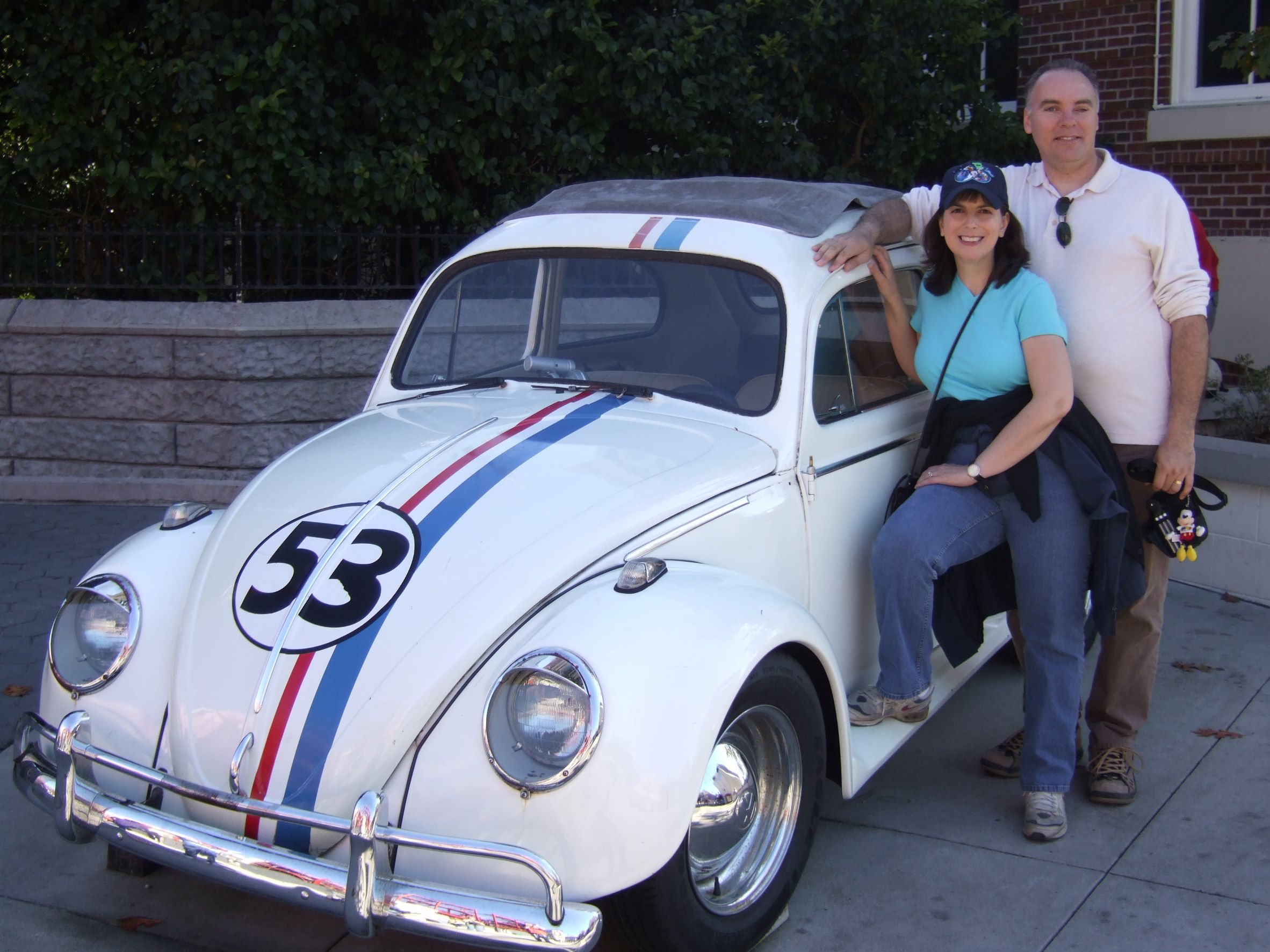
I’ll leave you with a picture of my wife and I with the Hollywood Herbie from our 2007 trip to Walt Disney World, for comparison:
A local antique mall is going out of business early this year and to reduce stock is having a 50% off sale. I’ve bought many things from them over the years and they will be sorely missed! I stopped in the other day to check to see if there was anything I couldn’t live without, and wouldn’t you know it… there was. I found this wonderful Donald Duck / José Carioca reversible cookie jar.
I already own a slightly larger José Carioca cookie jar (non-reversible) by the same company from the same period. So to have found this piece to make them a pair was priceless!
My research dates these cookie jars somewhere between the late 40s and the early 50s. Most sources place it just after WW2 with the Leeds company providing the manufacturing. This dating coincides with the first appearances of the José Carioca character. So this line of merchandise was likely produced to promote the film.
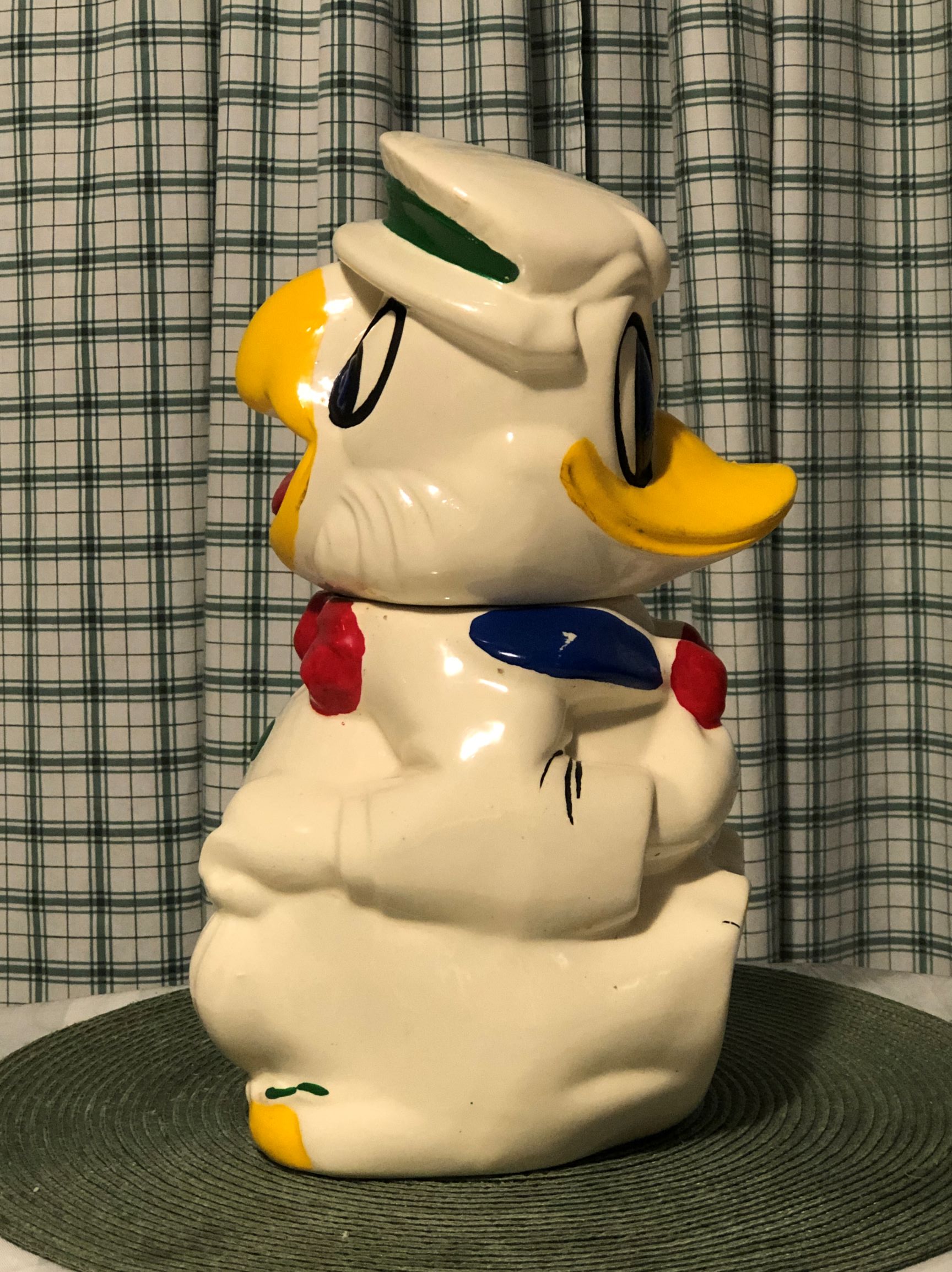
As you can see in the images above, Donald faces one way as Joséfaces the other. You can take the lid/heads off and reverse them over the wrong bodies, but who would do that?!?
Both seem happy enough to share a body and perhaps the cookies within. I picked this up for just $40.00 CAN but the asking prices on most selling sites start at around $100.00 US and can go as high as $400.00 US, or more. However, you can ask what you like, it only matters what it sells for when establishing true value!
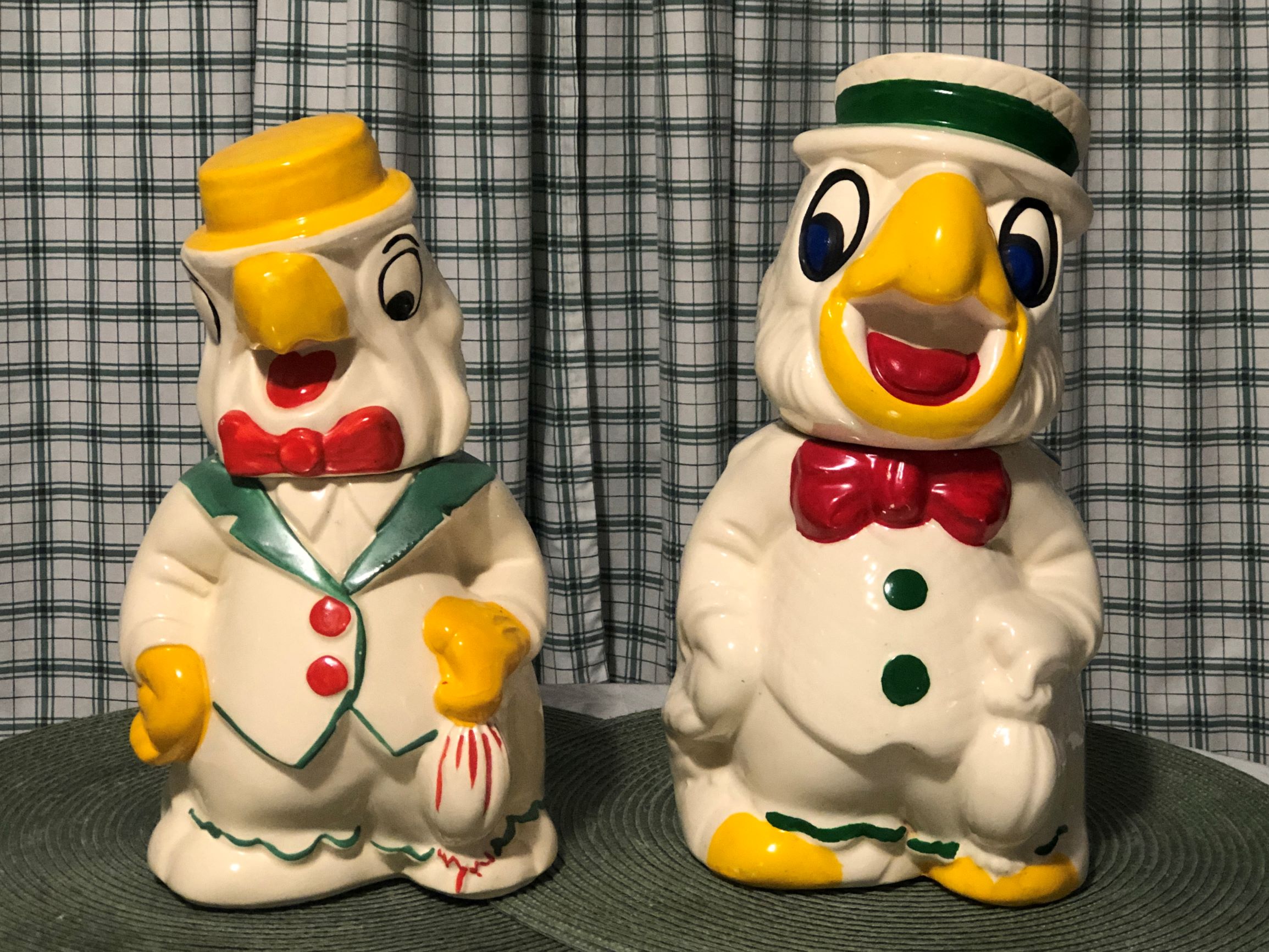
I was amazed and fascinated with the differences between my original José Carioca solo jar and this new (to me) combination one. Let’s have a look:
Here is a list of the differences:
The hat is different, going from a coloured one to a white with black band
The beaks are different configurations and sizes
The overcoat is a different style
One is wearing gloves where the other one isn’t
One is wearing shoes where the other one isn’t
Other differences are the obvious size change and the positioning of the bowtie on the lid of one but on the jar of the other. And obviously one has Donald Duck on his back! Similarities include the fringe on the pantlegs, the umbrella, and the red bowtie.
To see more of the José Carioca solo cookie jar, just click the link! You’ll find many more interesting facts about the character and this line of merchandise. Another post, this one featuring the EPCOT Attraction that José currently stars in, can be found by clicking that link. Lastly, why not click one more time and join José, Donald, and the third Caballero on a wild Road Trip. Strap in, for although it may not be the wildest ride in the wilderness, it’s still pretty fun!
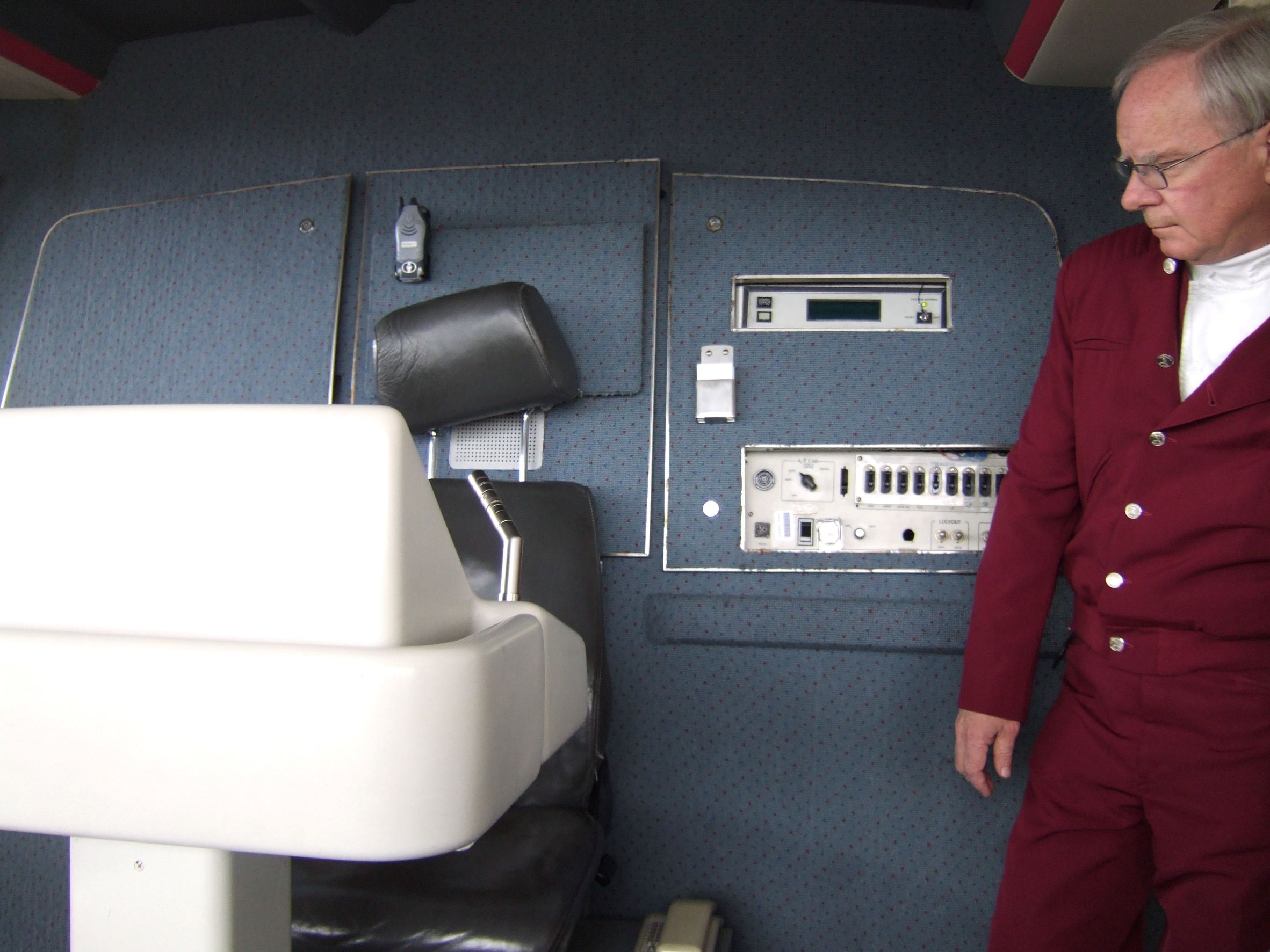
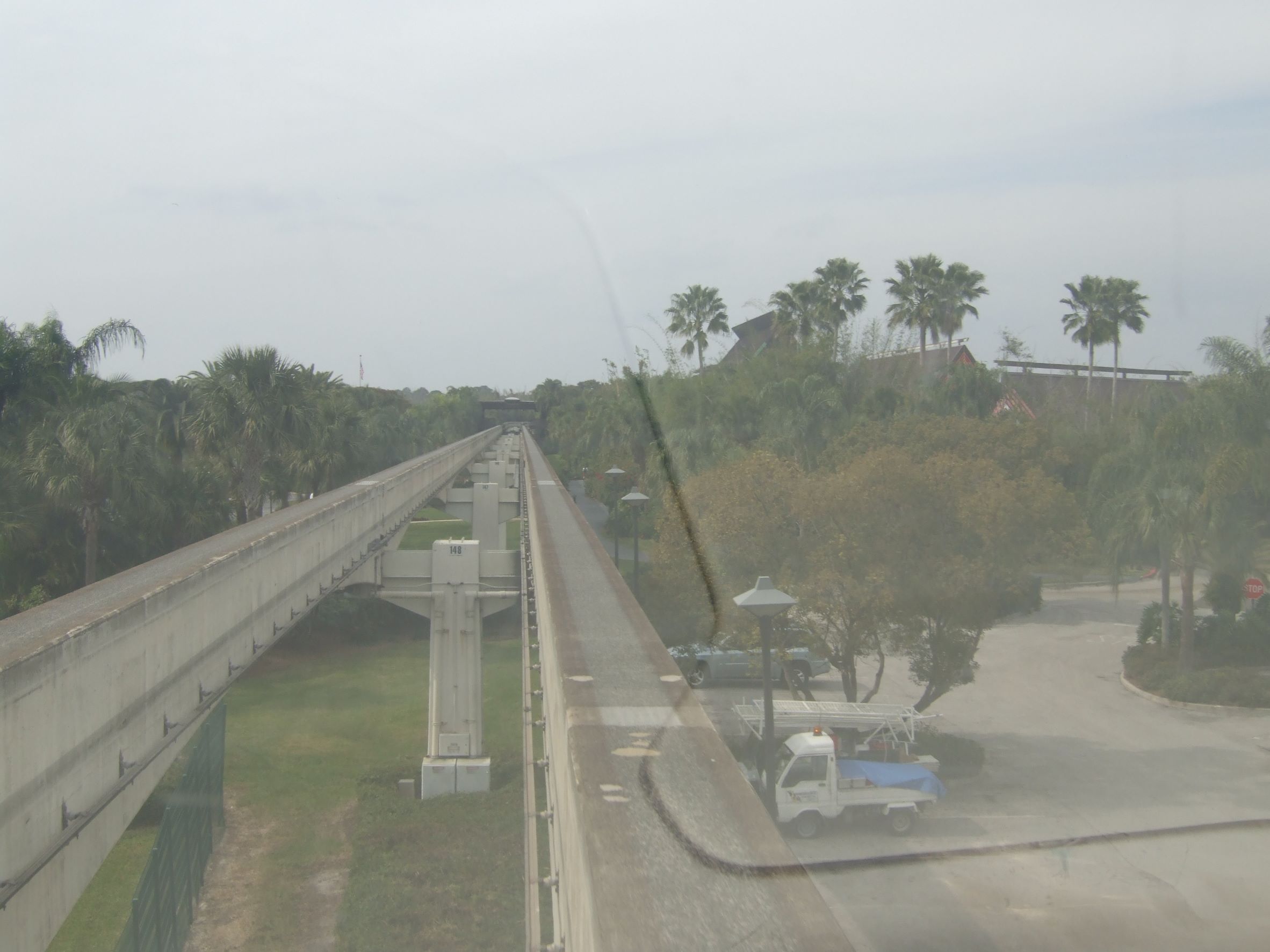
We have to step into our Time Machine in order to ride in the front of a Monorail at the Walt Disney Resort now. But back in 2007, my wife and I had the privilege of being right up front with the Pilot for a trip around the Resort Loop.
I won’t get into the tragic accident that brought an end to having guests ride in either the front or rear nose of the Monorails at WDW. As a matter of mention, however, you can still have this experience at the Disneyland Resort in California. I have a video of that experience on my YouTube channel.
Monorail Purple, shown above, is travelling on the EPCOT Loop. But the ride experience is the same no matter which car or which track you ride on. That is to say: Awesome!
It all starts when your Pilot enters the cabin and closes the door. Then it’s off for the trip of a lifetime with some interesting trivia and conversation. Cast Members always make the experience!
View of the TTCOn the way to Poly
The Contemporary Resort
Oh the things you can see! Have you ever ridden in the front of a Monorail at either the Walt Disney World or Disneyland Resorts?
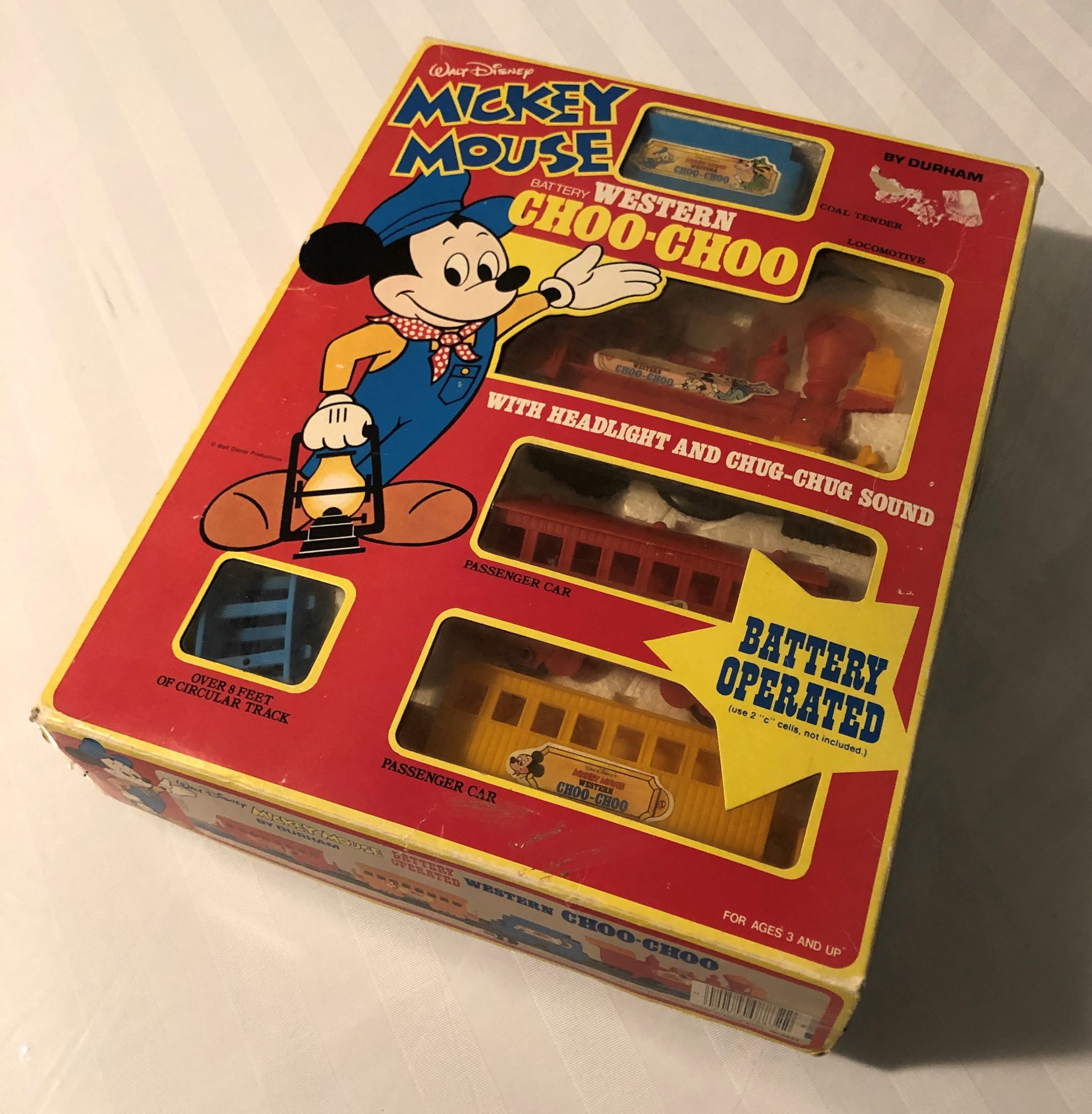
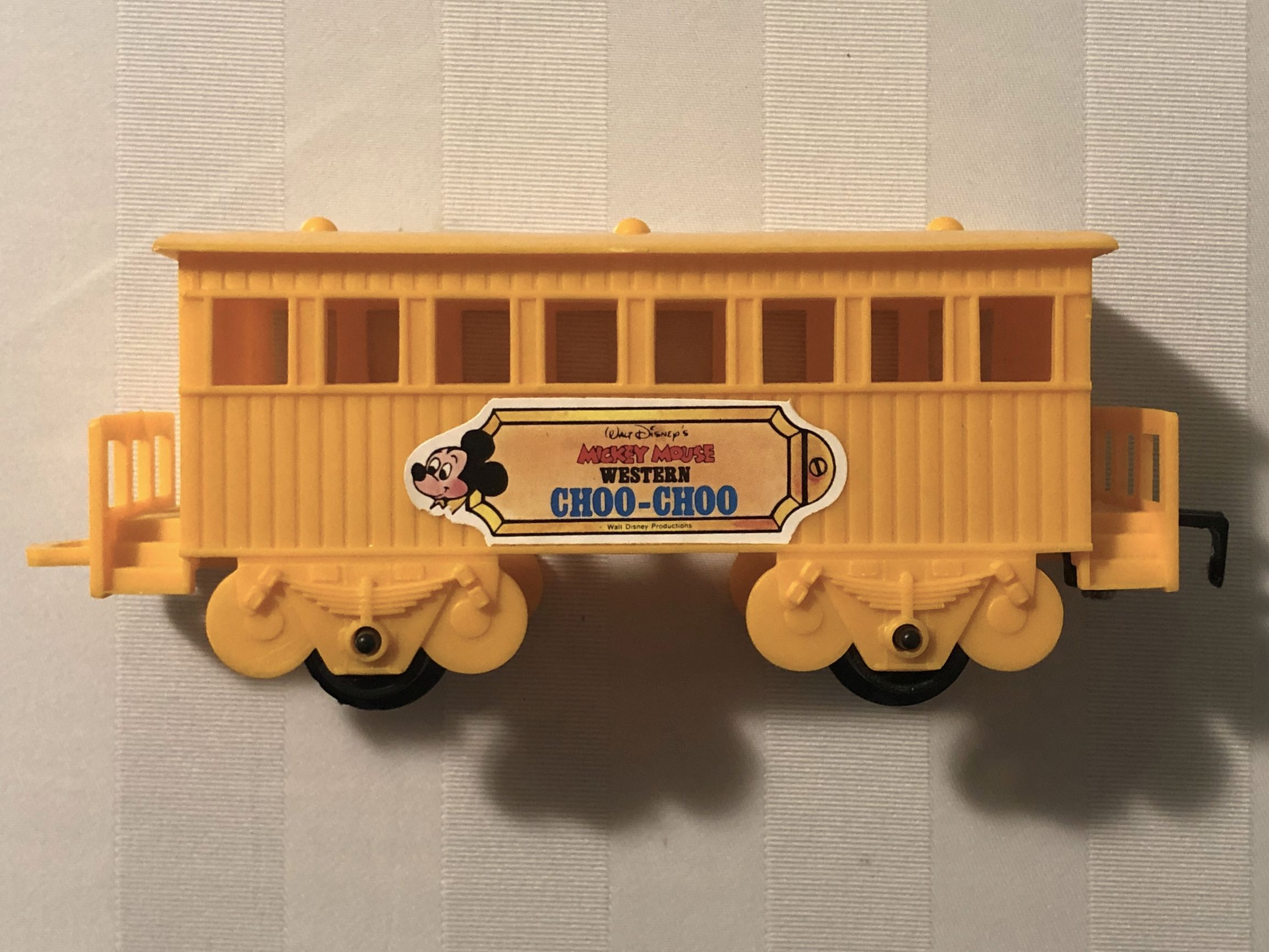
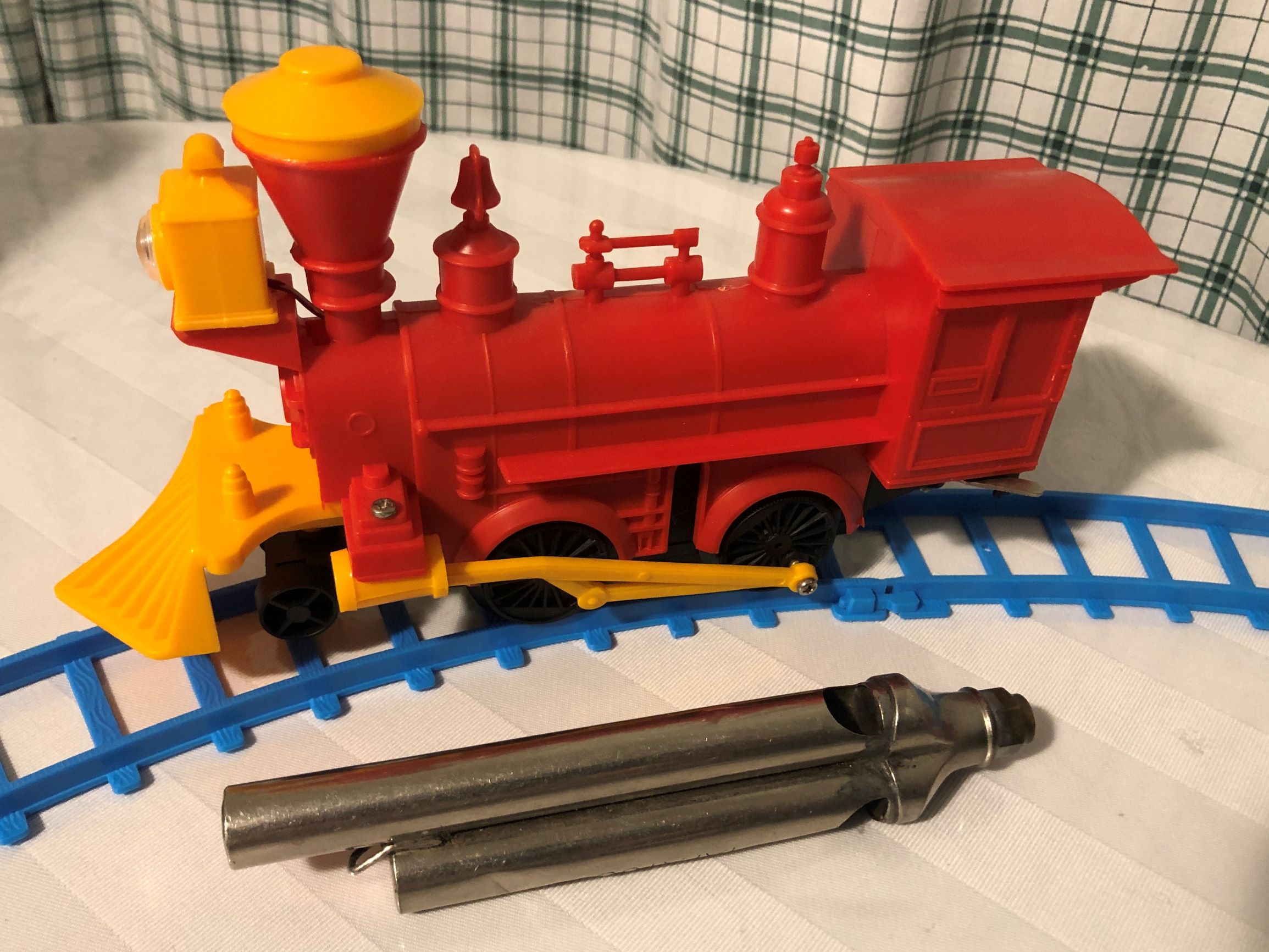
Walt Disney, and by extension Mickey Mouse, both had a fascination with trains. From models to backyard ride-on layouts to a ‘full-sized’ railway around Disneyland, Walt played with every size of locomotive he could! And so it’s not surprising that pieces of merchandise like this Mickey Mouse Battery Western Choo-Choo train would pop up on store shelves eventually.
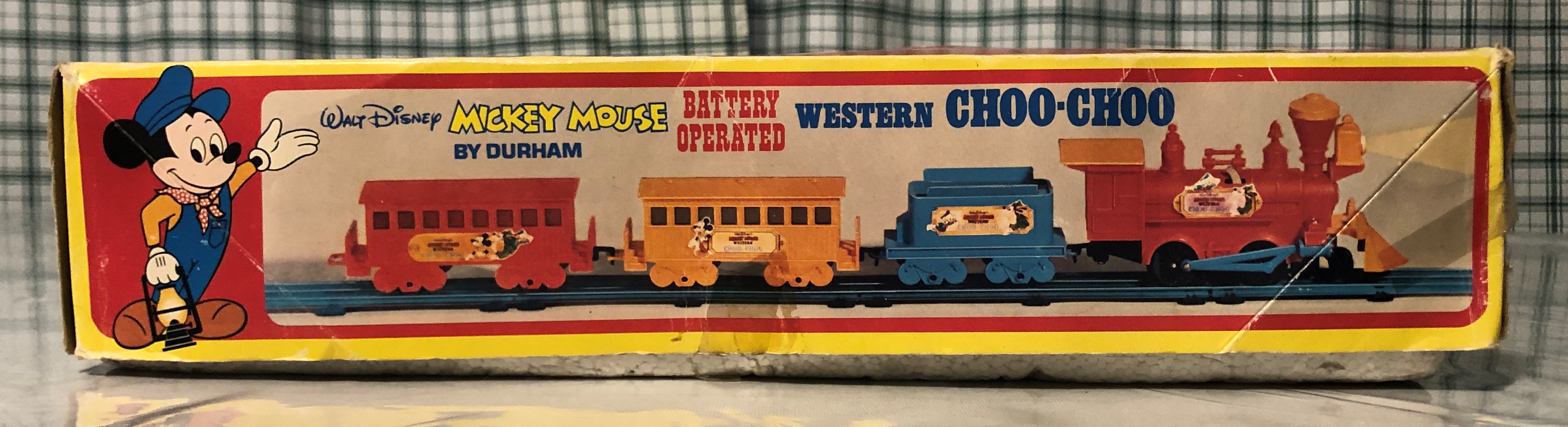
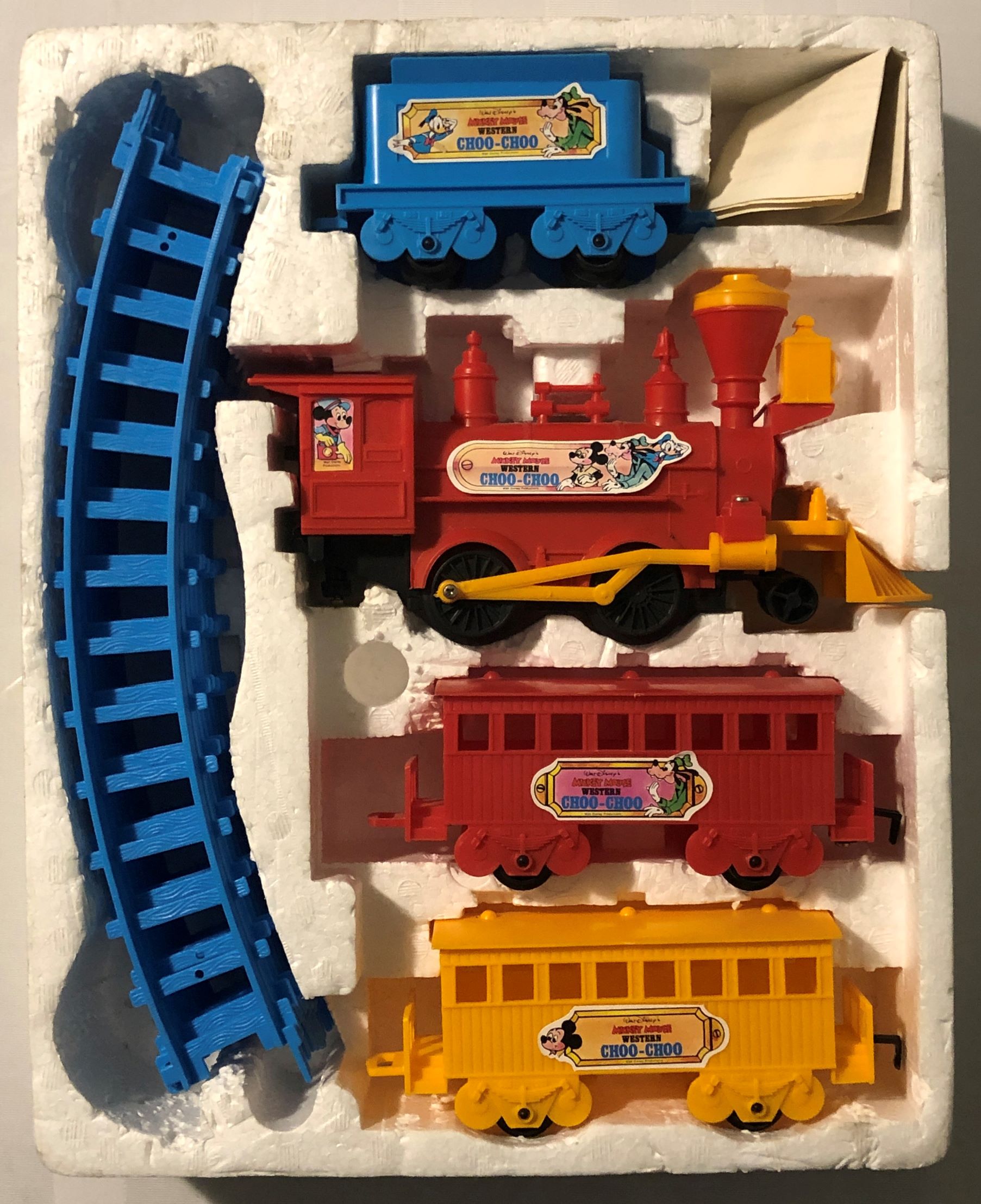
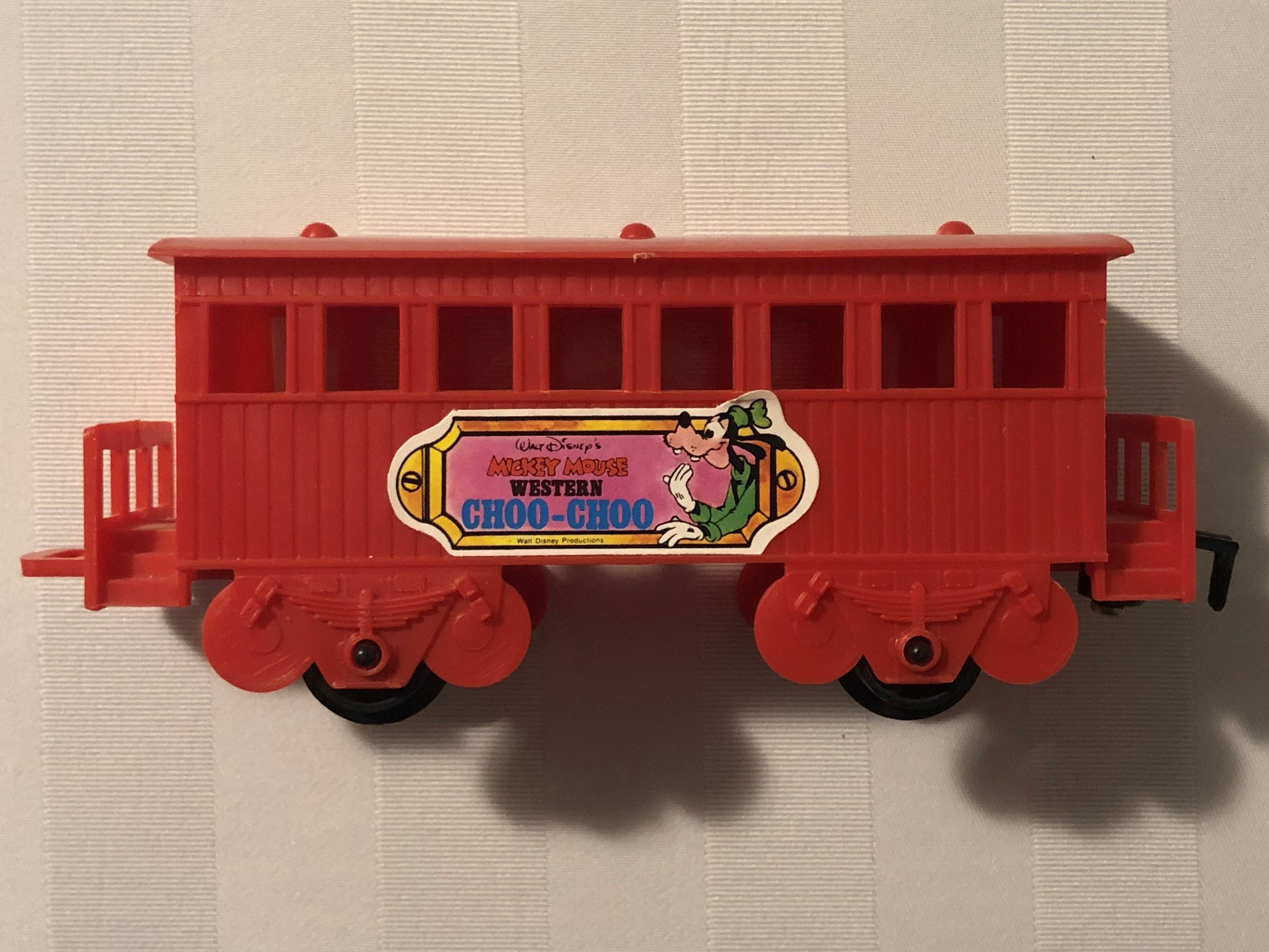
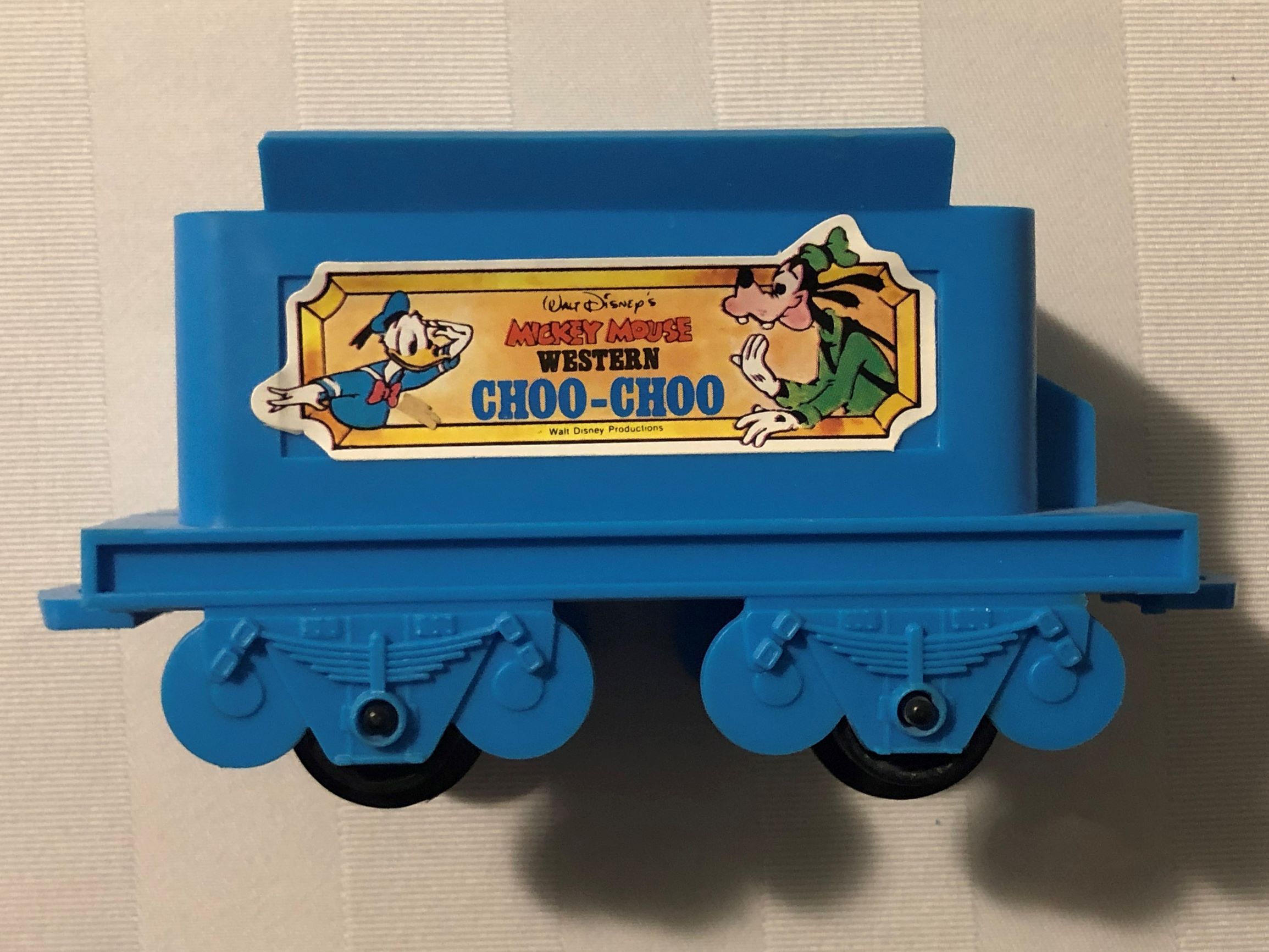
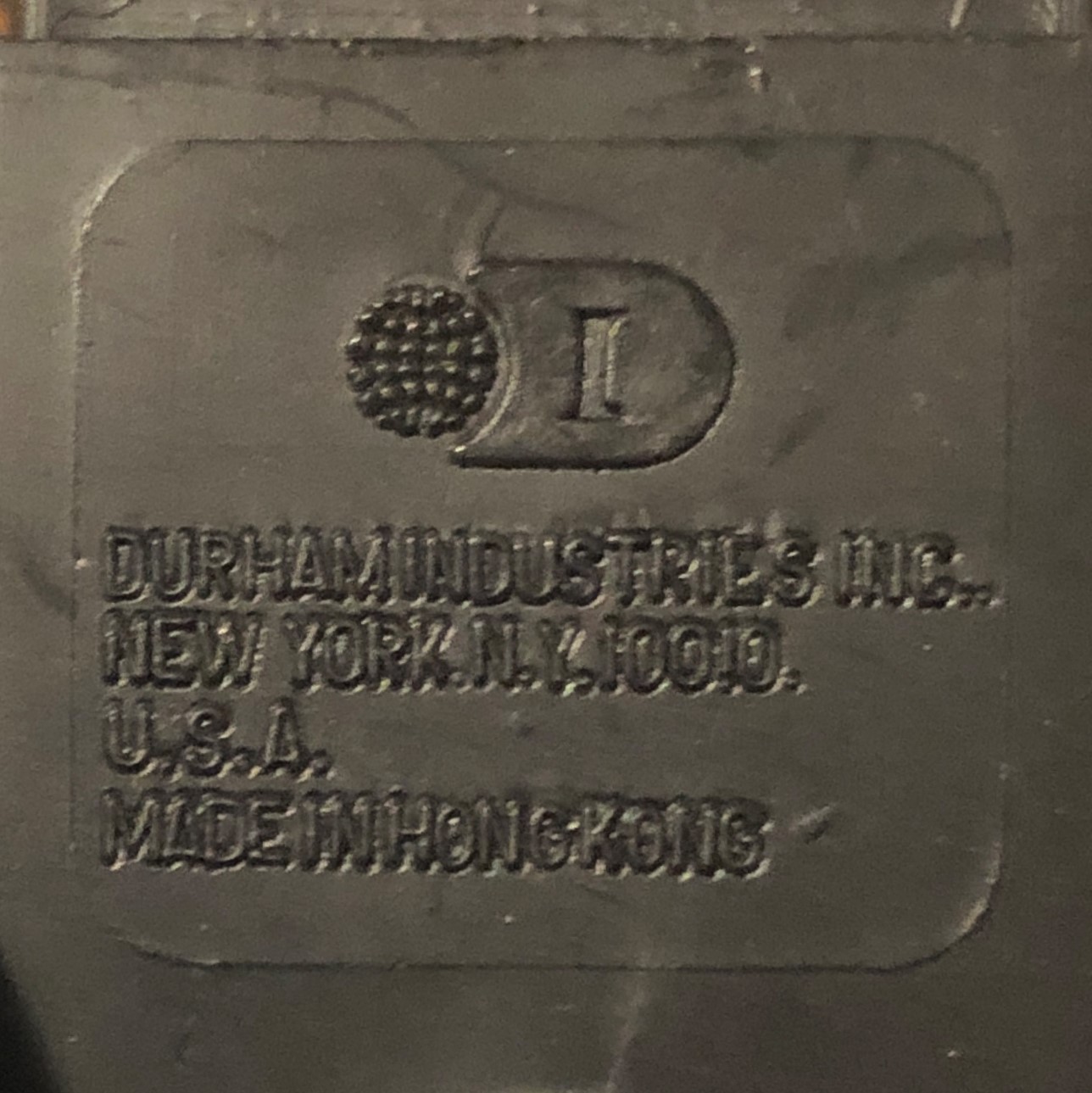
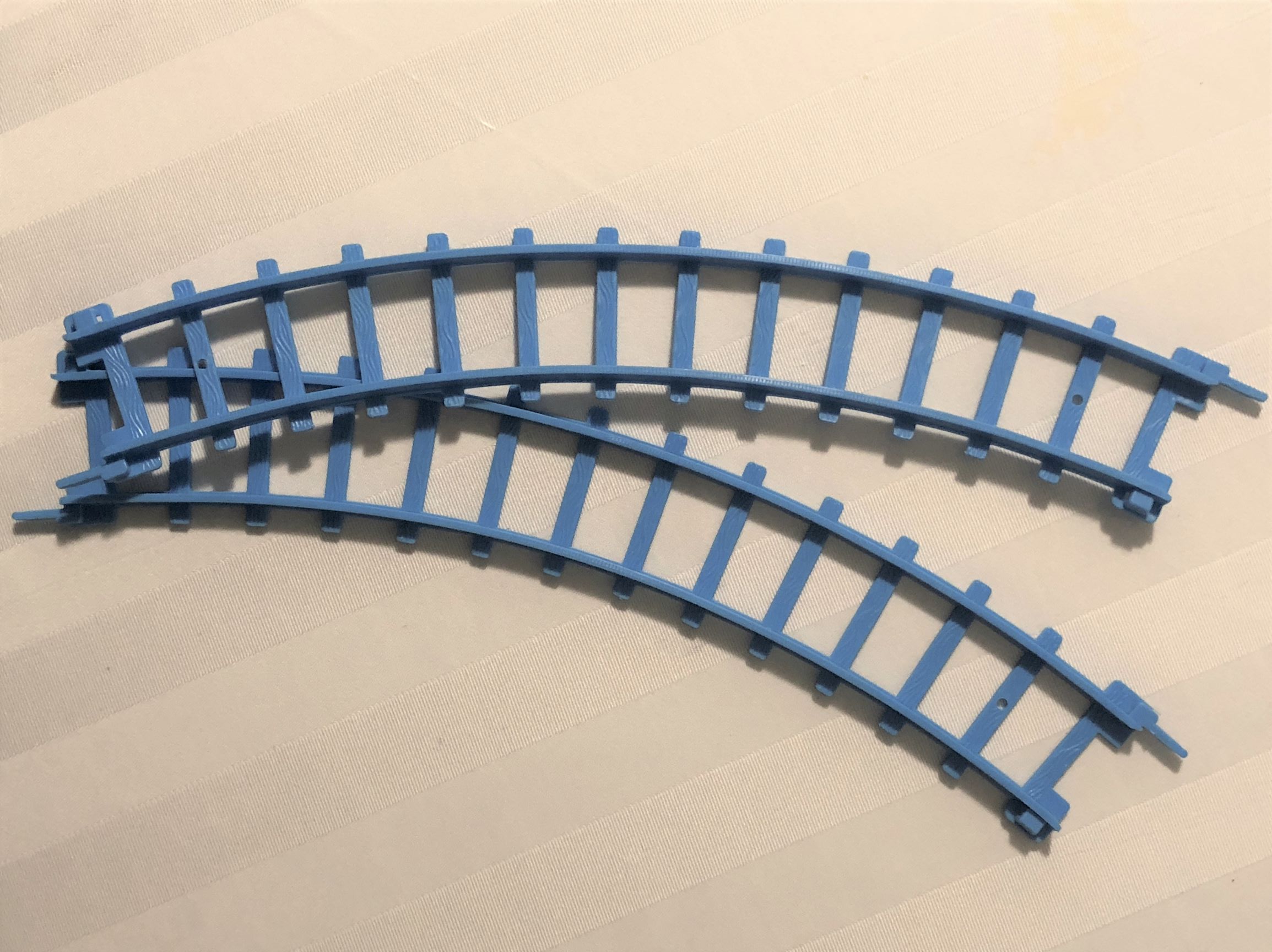
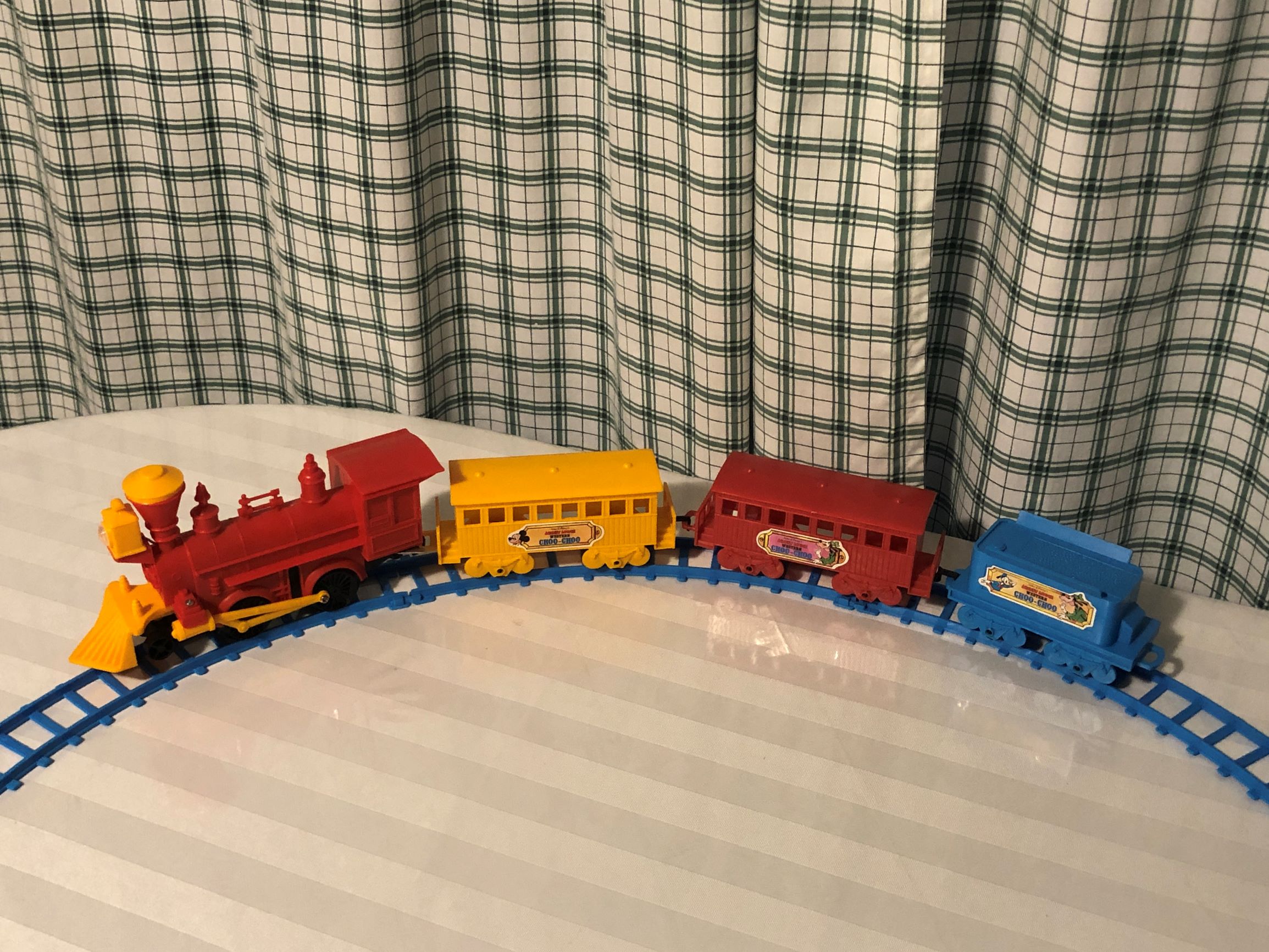
Sometime in the 1970s, Durham Industries Inc. manufactured this wonderful little plastic set. It contains one engine, a coal tender, two passenger cars, and 8′ of circular track. It’s powered by 2 ‘C’ batteries and has ‘genuine’ chug-chug sounds and a working light.
Mickey plays the part of a Conductor on the box, but is actually the Engineer on the train. Goofy and Donald Duck also come along for the ride.
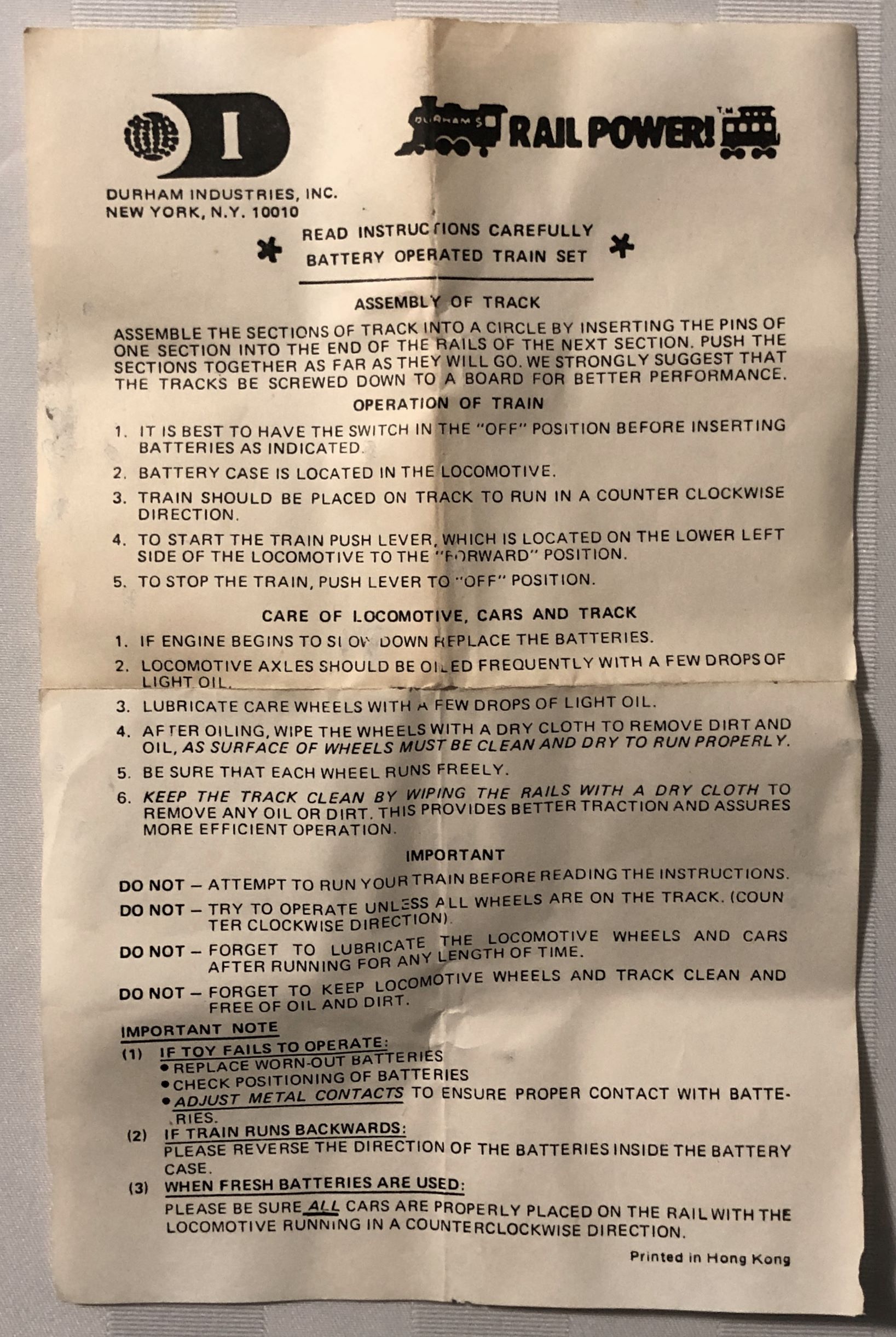
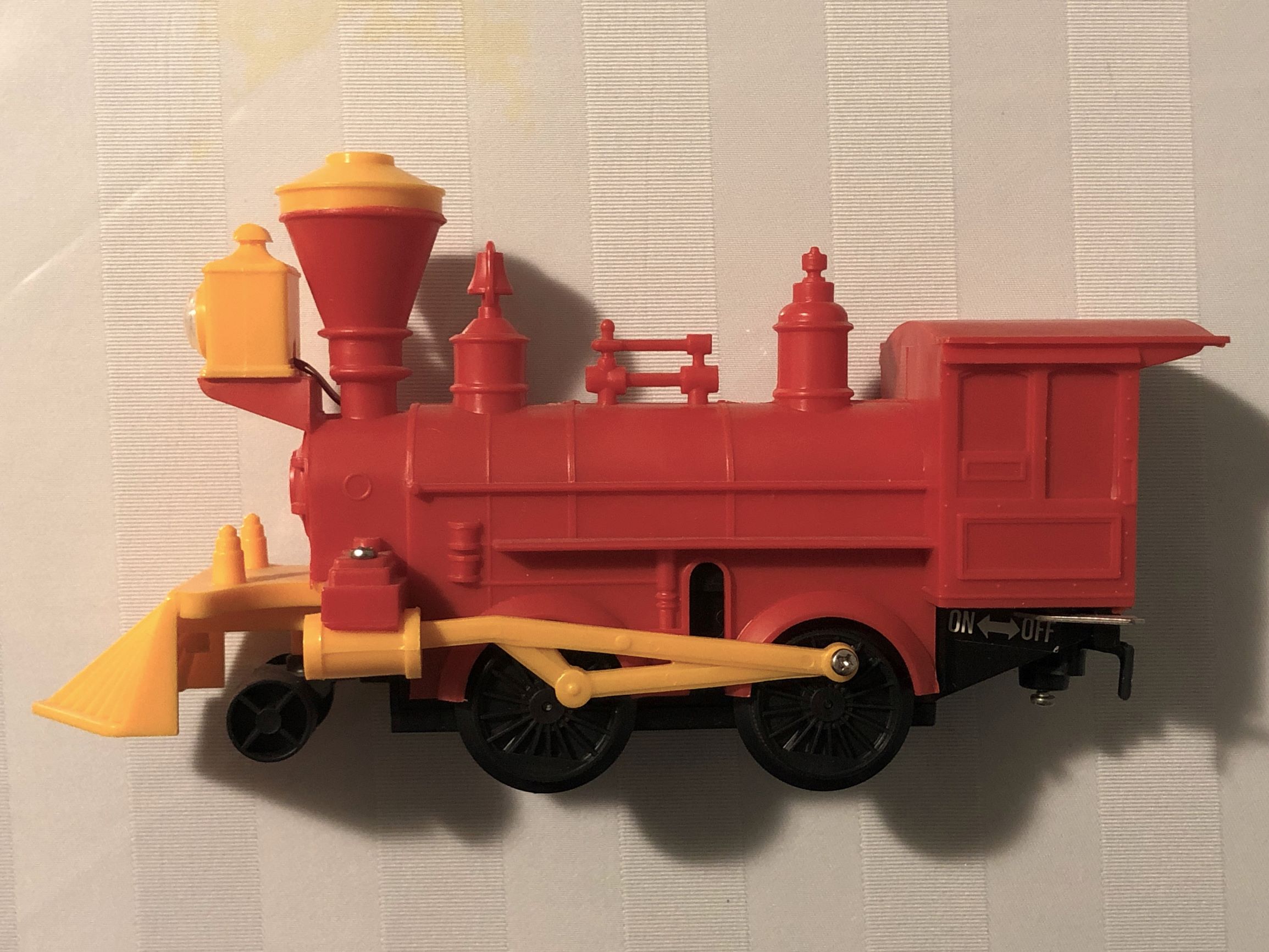
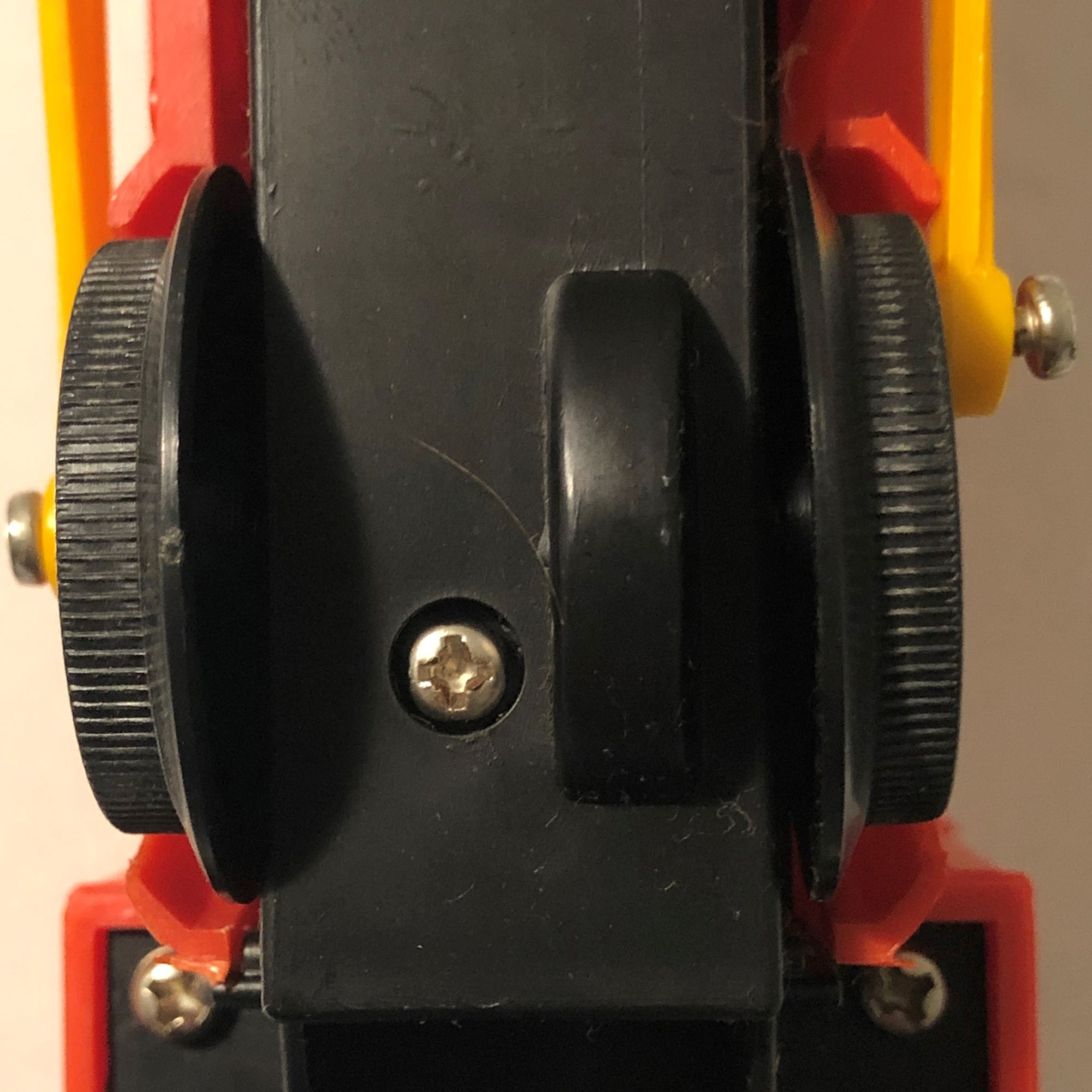
The instructions require that the train run in a counter-clockwise direction. Why? I surmise that it has to do with the drive wheel on the locomotive. There is only one on the left side of the undercarriage (see IMAGE TWO below) which would place it on the inside of the circular track. This would put the drive power on the shortest rail thus eliminating binding as the drive wheel pulls the train forward. This is important as there are no straight lengths of track on this layout.
If you’d like to run the train backwards, simply reverse the direction of the batteries. But being as the instructions list this point under a trouble-shooting section, I don’t think Durham is recommending this action!
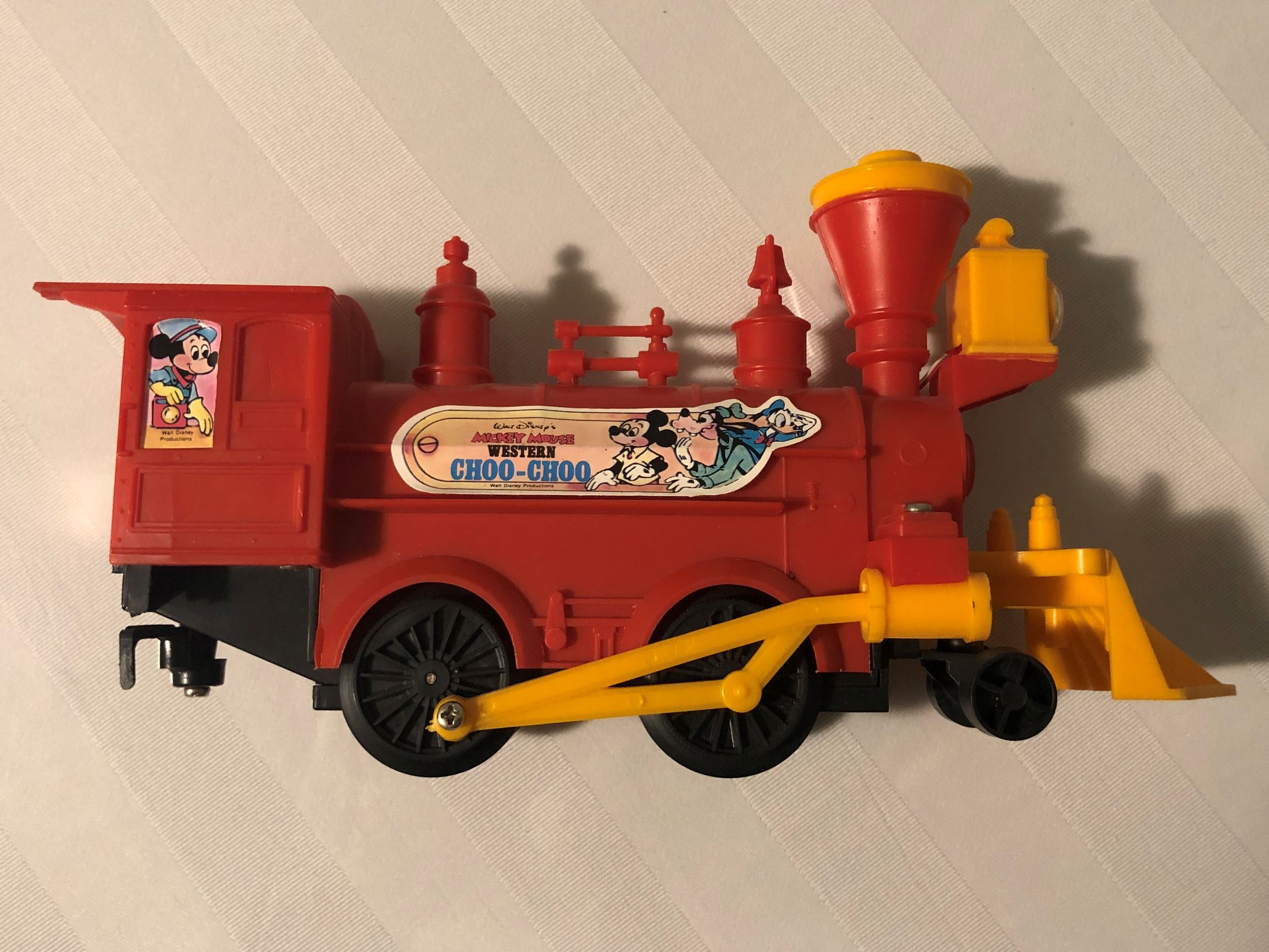
The stickers are only on one side of the locomotive and cars:
IMAGE ONEIMAGE TWO
The stickers are on the right side of the train only so that they can be seen from the outside of the track layout as the train goes around and around.
The instructions recommend that the track be screwed down to a plywood base for better performance. I ran the train with the track just sitting on my kitchen table and had no problems.
The configuration of the drive system for this locomotive is known as 2-4-0. Under the Whyte notation for the classification of steam locomotives, 2-4-0 represents the wheel arrangement of two leading wheels on one axle, four powered and coupled driving wheels on two axles and no trailing wheels.
So looking at the train (see IMAGE ONE above) and starting from the front, you have a smaller wheel, one on each side, joined with a single axle (2), moving rearward you have two larger wheels, again on both sides, which are on two axles coupled together as the driving wheels (4), and no further wheels after that (0).
IMAGE THREEIMAGE FIVEIMAGE SIXIMAGE SEVENIMAGE FOUR
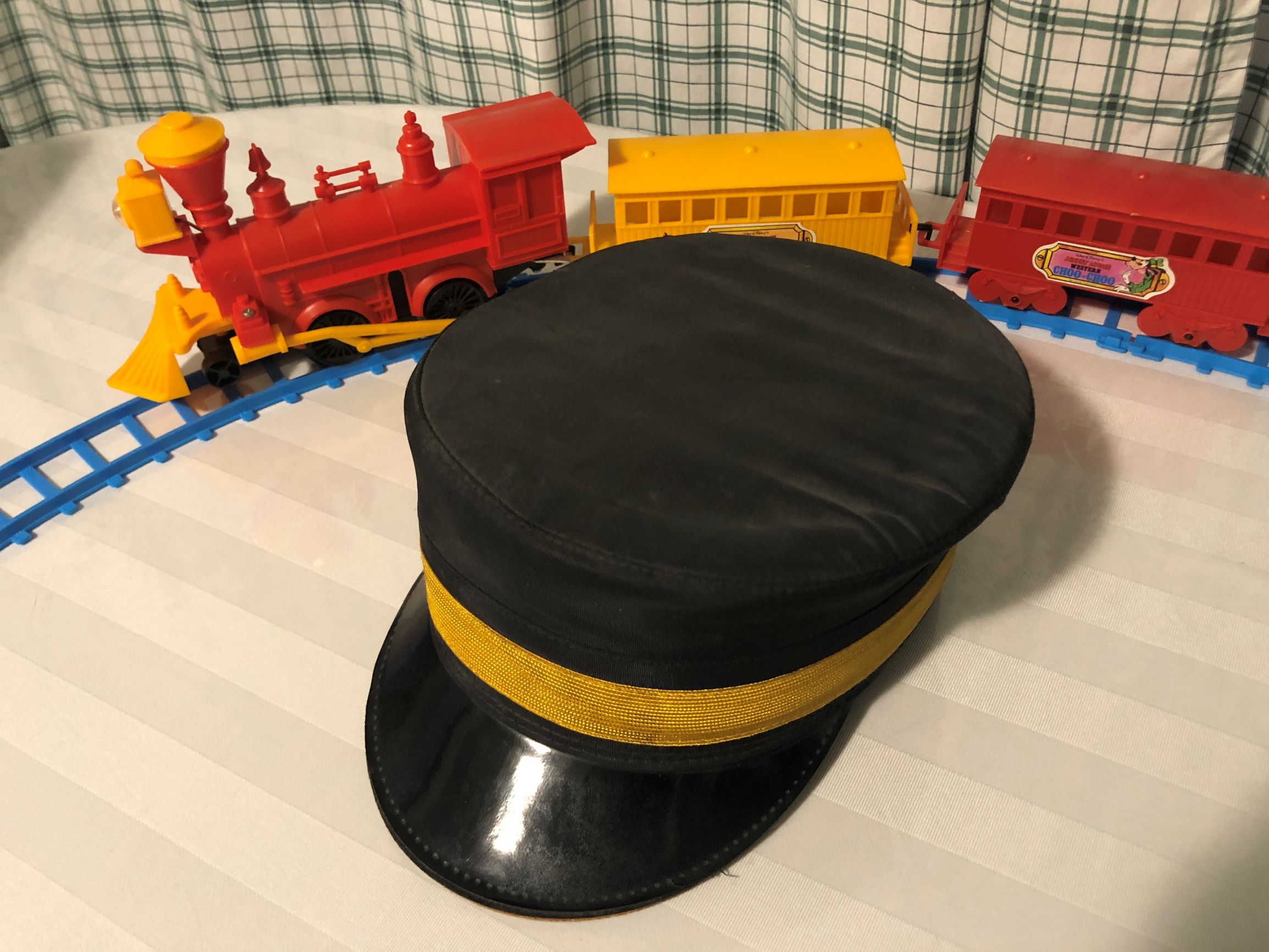
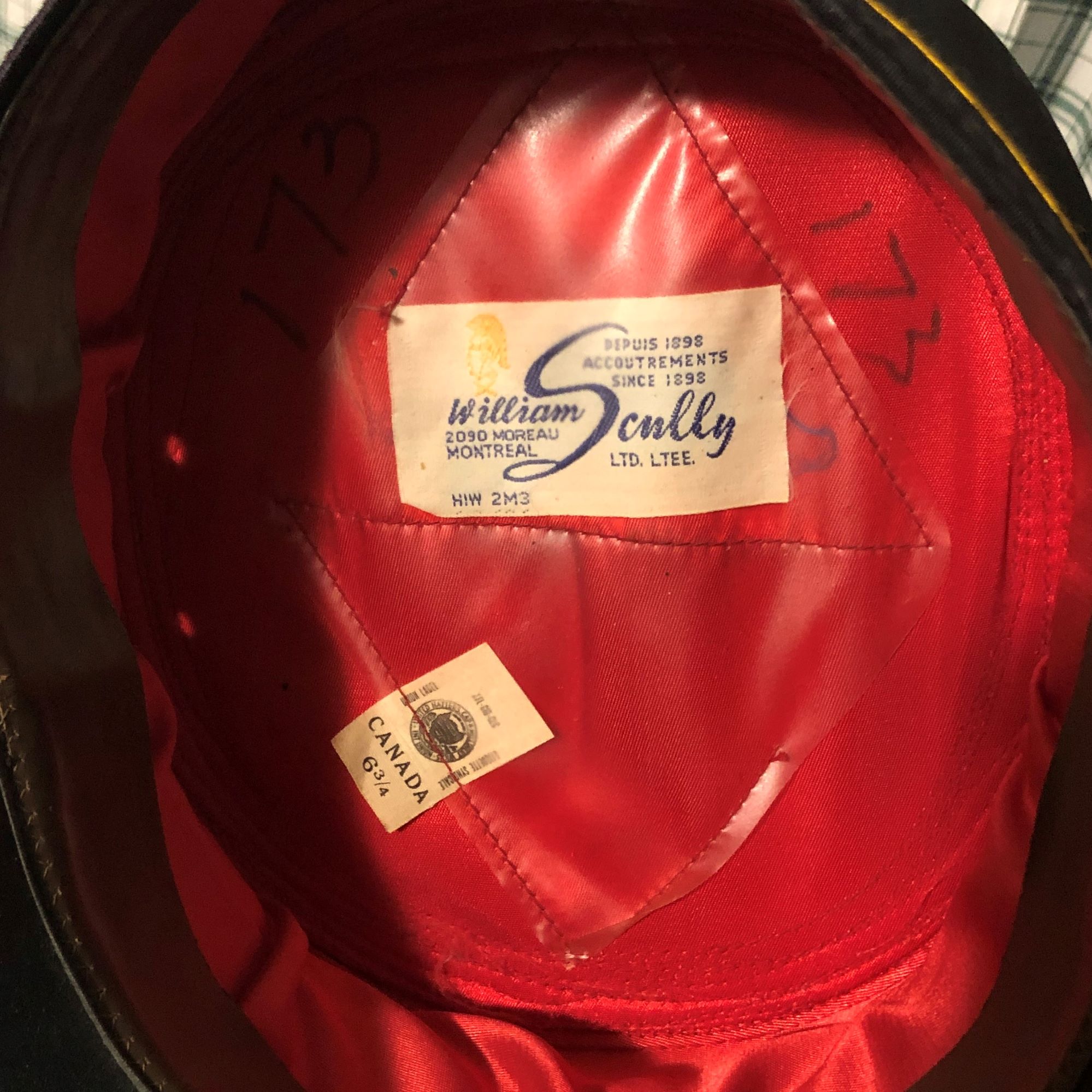
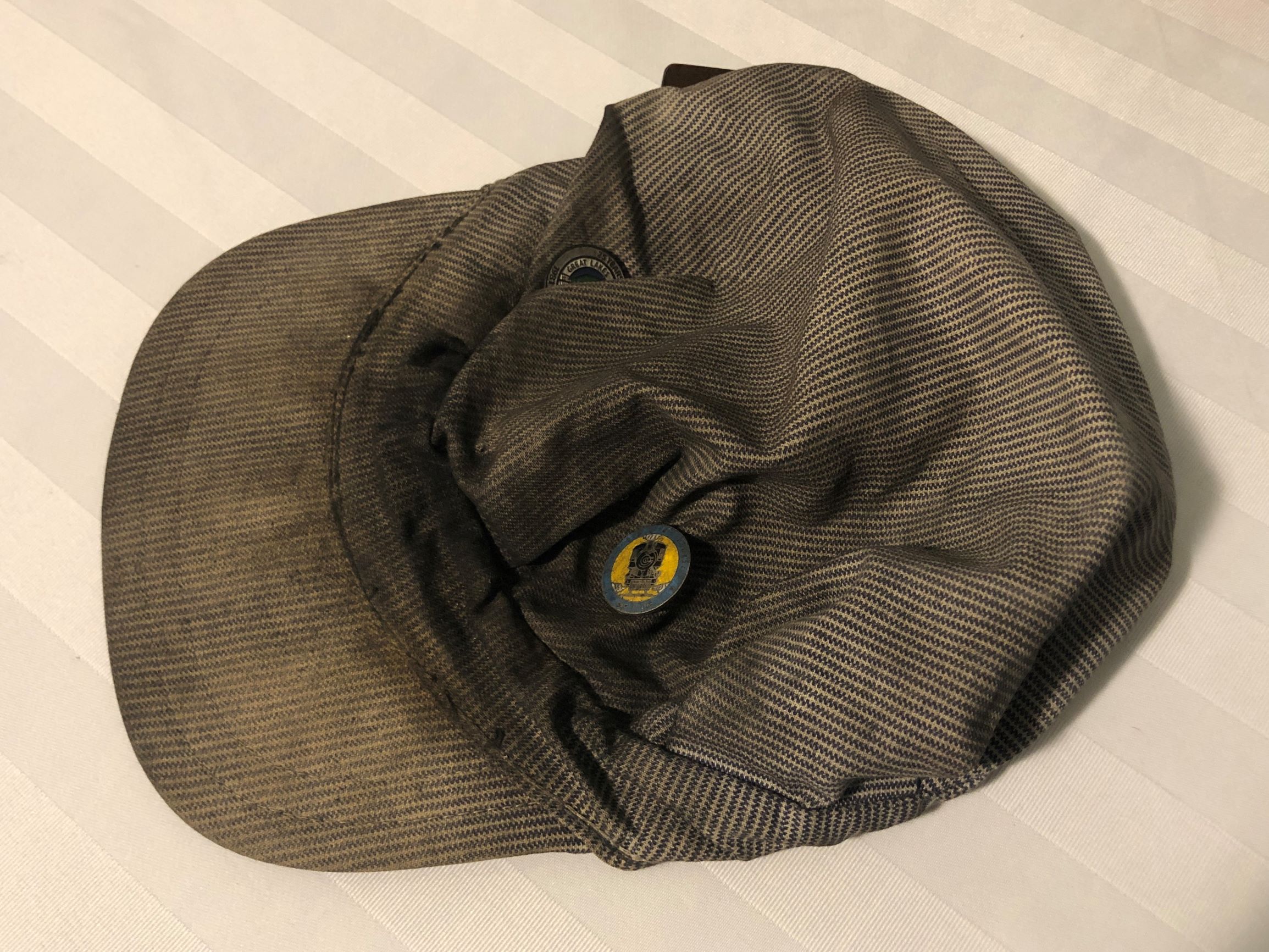
What’s the fun of running a train if you can’t wear cool hats? I have a friend who is a rail enthusiast and he leant me two caps for this post and the companion video. IMAGE THREE and FOUR show the Engineer’s cap while IMAGE FIVE, SIX, and SEVEN show the Brakeman’s cap.
I’m told that for the sake of authenticity you never clean a Engineer’s cap! The Brakeman’s cap was produced by William Scully Ltd. which has been in business since 1898. To differentiate the duties of each man on the railway, the cap would have a different colour for the band. The cap in IMAGE FIVE and SIX (above) sports a yellow band, making it a Brakeman’s cap. If the band was red it would belong to a Conductor.
Train Whistle Medley
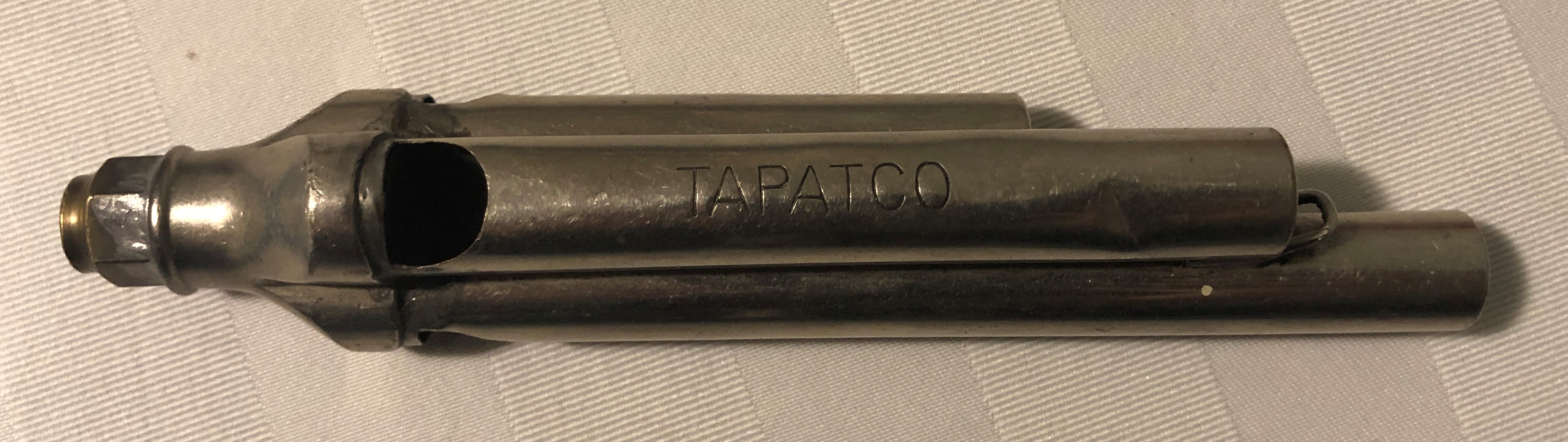
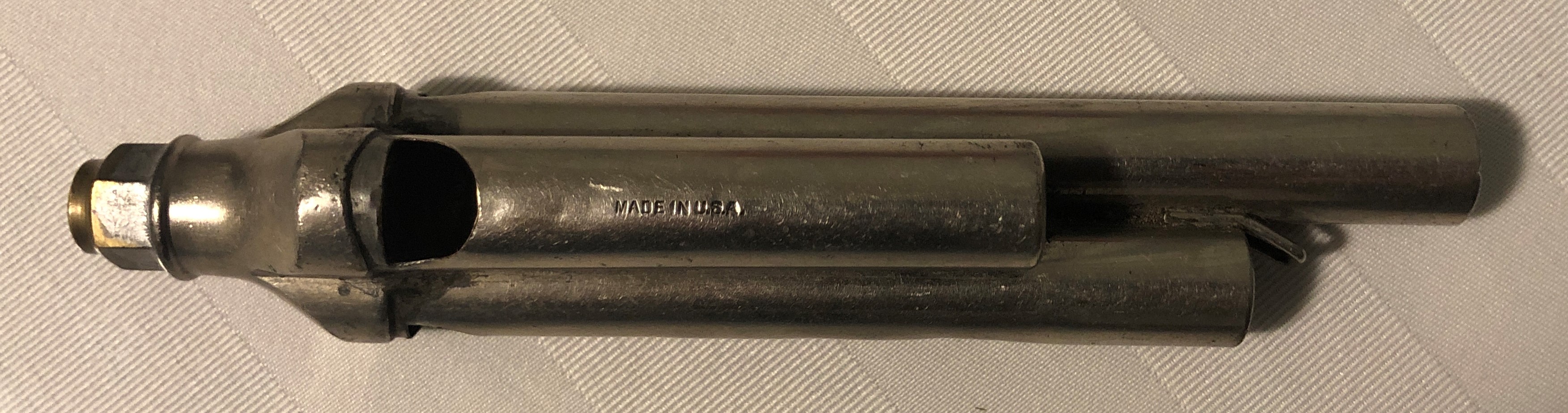
This whistle was custom made, adapted from steam-powered to air-powered (in other words, you now have to blow like crazy to get it to make a sound!) from a vintage Tapatco 3-chambered Conductor’s whistle. The audio clip (above) starts with the ‘All Aboard’ call and whistle, then a ‘Train Approaching’ whistle, a ‘Stop at Next Station’ whistle, and it concludes with a basic medley of whistle sounds.
I hope you’ve enjoyed your trip on the Disleelandia Railroad (the DRR). We depart from our station every day sharply at 7:00 am both on weekdays and weekends. Tickets to ride are free. No snacks or beverages are served. You can also board at our Facebook page or our YouTube channel. Wherever you choose to join us, be sure to listen for the call of…
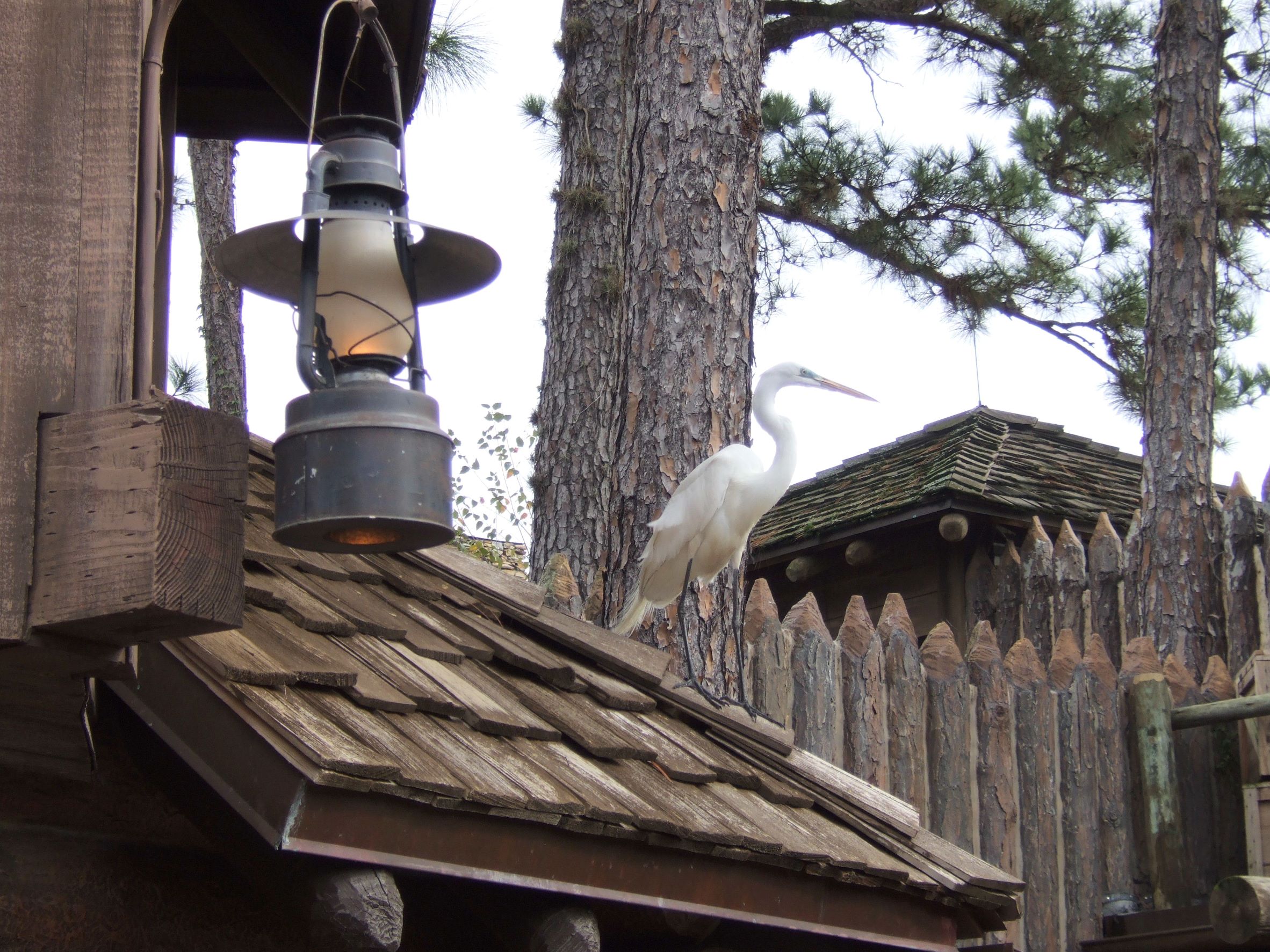
Disney does a great job of simulating life. Whether it be through animation or animatronics, sometimes you have to look twice to determine what is real and what is just an illusion. But I assure you that the Great Egret that I found in Frontierland at Walt Disney World’s Magic Kingdom was quite real!
In fact, I think he owned the place:
No admission ticket needed (Photo c. 2007)
Cats, water fowl, and other beasties are free to roam around the Theme Parks of Disney. After all, just how would you stop them? Best to issue them a free Annual Pass and let them be!
I find that this real element adds so much to the immersive Disney experience.
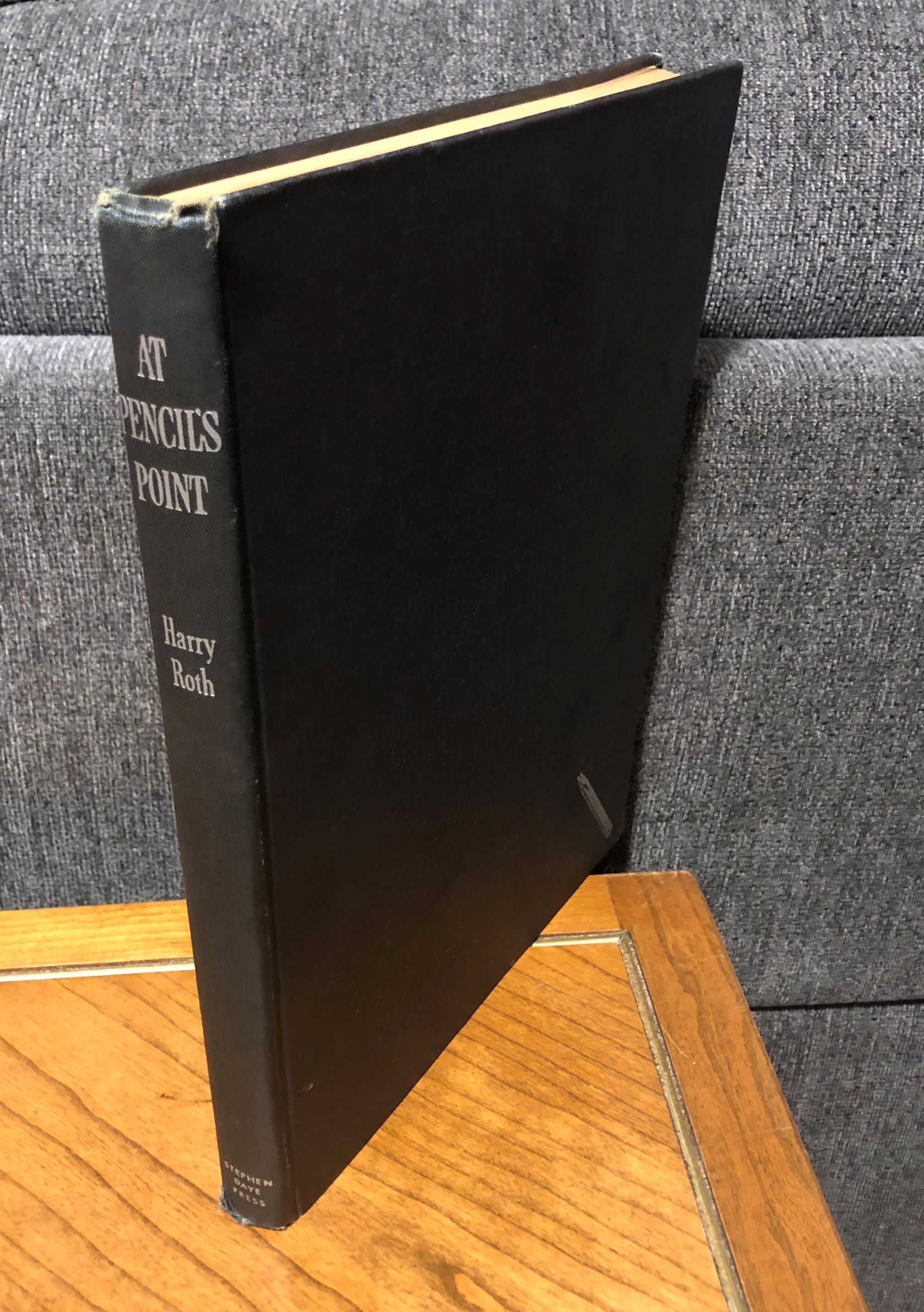
Publisher: Stephen Day Press / The Murray Printing Company
Year: 1946
Pages: 210
Type: Hardcover
ISBN: N/A
“To overcome your fear of a piece of plain white paper.”
Was there a dust jacket?
Every image of this book, including every reprinting (the last being June of 2005), seems to indicate that it was never released with a dust jacket. Probably because it was meant to be used as a hands-on workbook and not simply as a coffee table volume that one would show off as a display piece. Being a textbook of sorts with its publishing in 1946 (yup, it’s old!) is a good reason for its utilitarian look.
Contents PageIntroduction Page
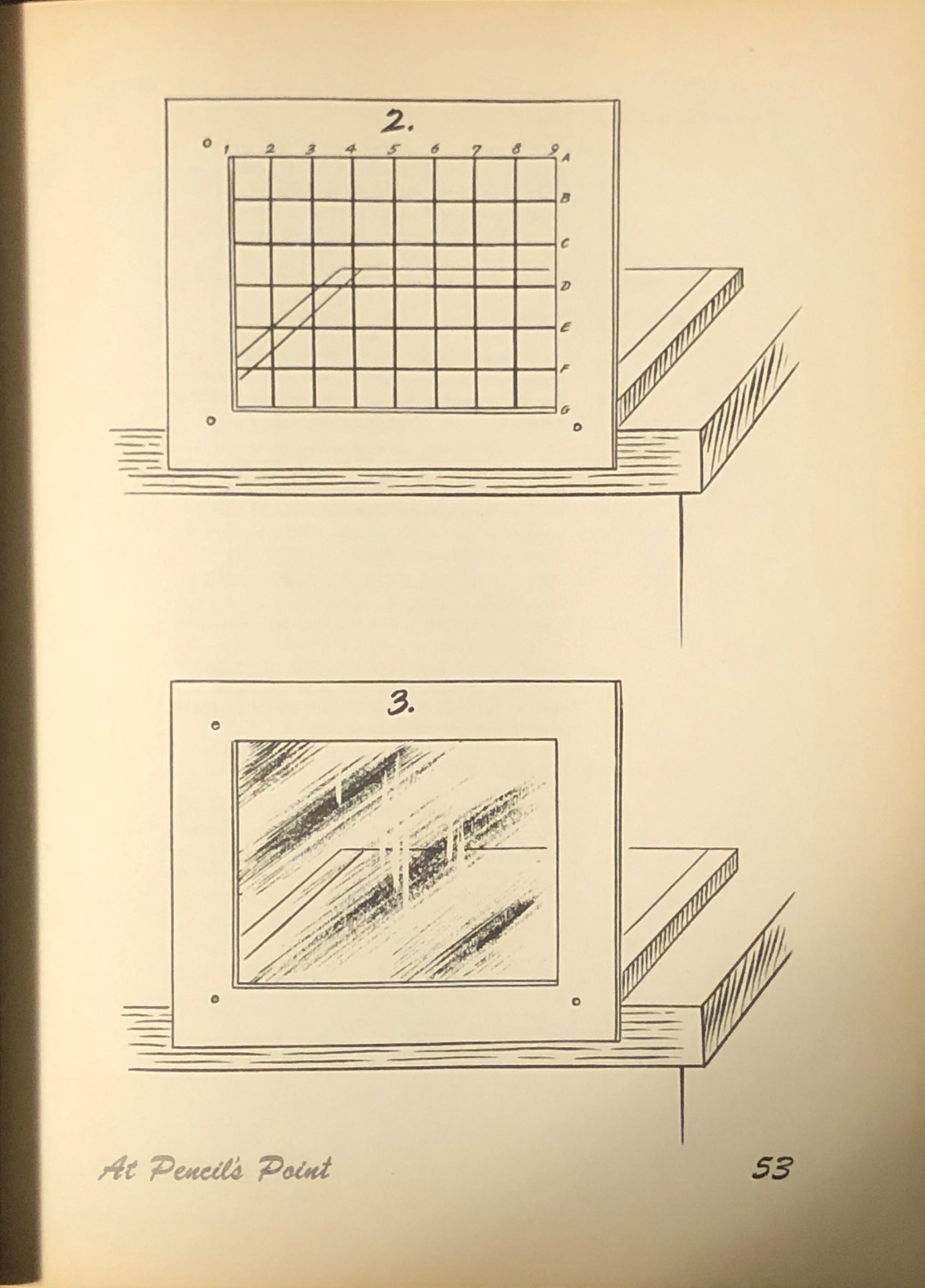
I attended Sheridan College in the mid 80s for art instruction. So many of the things in this book I can attest to. They are valid and do work. But some of the things are strange and funny! Such as the suggestion to practice your landscape drawing by looking out your house window. That in itself isn’t the strange part. Mr. Roth suggests then taking a black marker with which you would draw a horizon line on the glass along with other reference and plotting marks! Did they have dry erase markers in 1946? But wait, it gets better: If you felt that the view out of your window wasn’t interesting enough, the author suggests that you go to your friend’s house and complete the exercise there. Yes, go to your soon-to-be ex-friend’s house… and draw with marker on his windows. I wonder how many friendships were destroyed by this book?
Most of the ideas and suggestions in this book are more sensible! One good rule is given at the beginning of the book. It states that ‘you may copy’ but ‘tracing will do you no good.’ This is so true! I can illustrate this for you with a personal story: My mother loved to paint. She struggled with perspective and enlarging the reference material she copied from, mostly images of wildlife. If she had stuck with it, she would have overcome this and eventually been able to recreate and re-envision what she was seeing. Instead, my father, with good intention, made her an enlarging machine. With this, she simply inserted the image to be copied, it projected it up onto a canvas, she traced the image, and painted it. Thanks to this method, she was never able to create original pieces of artwork throughout her many years as an artist. Yes, it may seem that ease of rendering is taking forever to achieve, but the time invested will be well worth it!
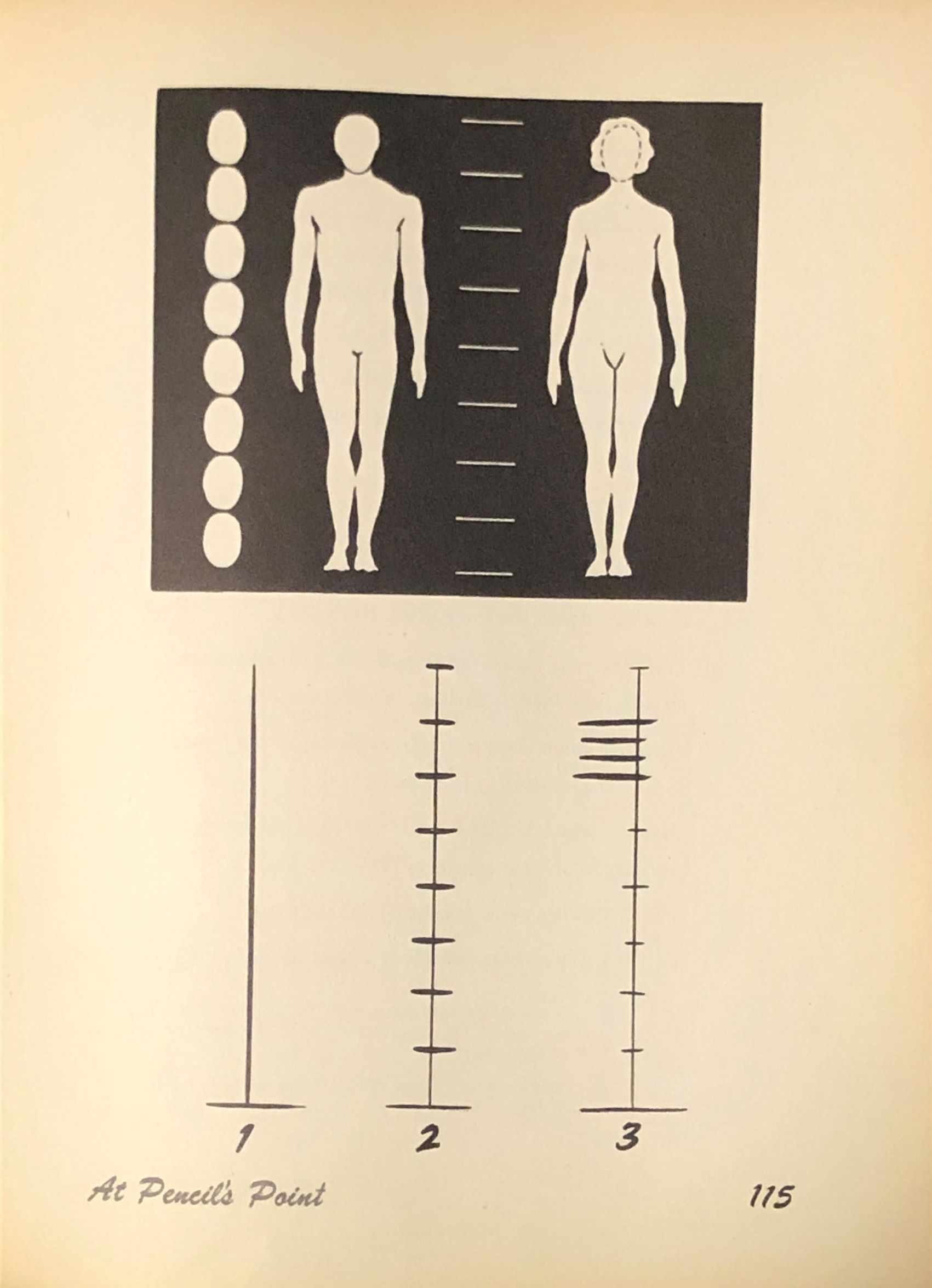
I would say that this is definitely a how-to book in the truest sense of the term. It is written in a straight forward instructional tone with tips and exercises to complete. Yes, you don’t just read this book, you use it to actually learn to draw, page by page! In fact, at the end of the book, it says: “If you have worked your way through up to this point – and I mean worked, not just skimmed through the pages – you should have acquired a basic knowledge of drawing…”
A brief bio of Mr. Roth was written in newspapers upon his passing. One such is as follows:
New York Times July 3, 1976, Page 19: Harry Roth, a book illustrator and muralist, died Wednesday in Benedictine Hospital, Kirigston, N. Y., after suffering a heart attack in his home in Woodstock, N.Y. He was 73 years old.
Mr. Roth, a native of Germany who came to this country in 1940, studied at the Art School of Munich. From 1951 to 1968 he was in Topeka, Kan., as an art consultant for the Menninger Clinic and as painter of murals for banks and other institutions. Mr. Roth was the author of “At Pencil’s Point,” which deals with the essentials of drawing.
Survivors include his wife, the, former Lillian Gelb; a daughter, Dolly Honig; a sister and two grandchildren.
To conclude, note the ultimate benefit that could come to you from reading At Pencil’s Point: “Not onlyart – life itself acquires new meaning for the person who has trained his eye while training his hand to draw.”
I would give this book a 3.5 out of 5 Stars. It does stay with pretty basic ideas that would be easy to follow for most beginners. But some of the exercises would be confusing for some. Also, even the book acknowledges that further instruction with a professional in-person teacher would be necessary to become any kind of an artist. And it also says “that most of my readers will not change the course of their lives because of this little book.” Meaning, that a reader would likely only use the information learned “for your own pleasure and that of your friends.” But that isn’t a bad thing!
If you like artwork, please check out some of my Commercial Artwork and Caricatures by clicking the link. You’ll be able to decide whether or not I’m qualified to critic Mr. Roth’s teaching techniques!
When you gotta go, you gotta go! And when that happens in the middle of the night, you better have something to light your way. No problem, the Mickey Mouse Electric Nightlight is on the job!
Schmid is usually associated with musical figurines or other ceramic collectibles. But I guess it’s not too much of a stretch to offer a such a wonderful ceramic night-time accessory:
Sitting pretty and looking happy, Mickey is ready to put the light in your night. I found this at a local antique shop for $60.00 CAN. As you can see, I didn’t buy it, but I thought it deserved a place in my In the Wild series.
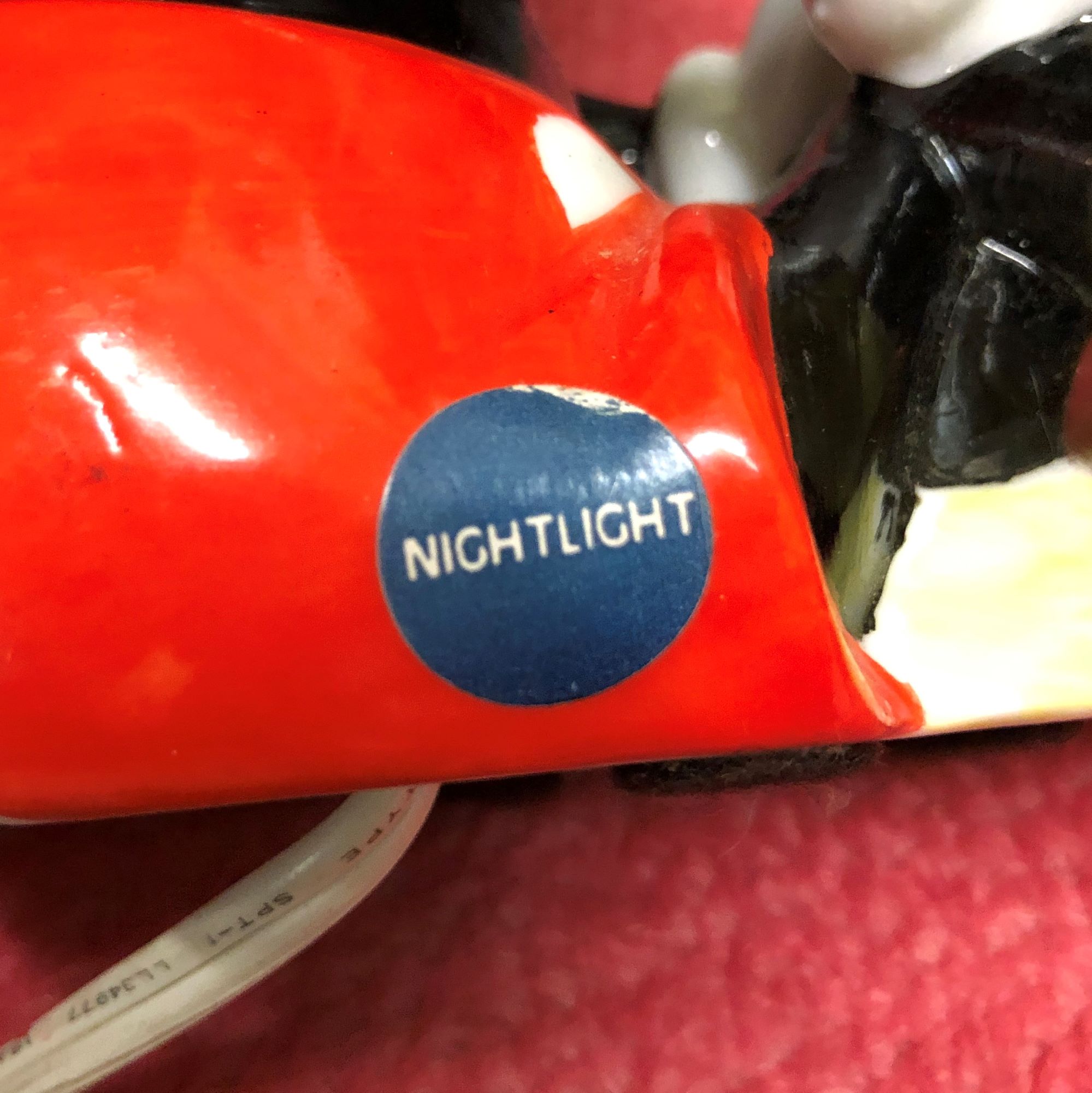
The fact that it still has the ‘Nightlight’ sticker on it is a nice touch, as these are usually removed by the consumer when the piece is put on display in the home. The paper ‘Schmid’ sticker is also still affixed to its original place inside the bottom rim. The Disney branding in this case is The Walt Disney Company. This trademark has been used from 1986 to the present.
The plug with the dial toggle for turning the nightlight on and off, and the plug with no ground prong, likely dates this piece to the late 80s or early 90s. A third prong was added to outlets and plugs in the mid-60s to increase safety and prevent electric shock. But many appliances didn’t require the third (usually rounder) prong for some time. But by the late 90s most appliances were appearing with the third prong more often than not as building codes and consumer awareness increased.
Mickey gives us the cold shoulder while he waits to be plugged in so that he can give us some warm light. Don’t worry, Pal! I’m sure someone will buy you soon.
This nightlight also came in a larger musical version. I also have a Prospector Mickey nightlight and flashlight combo. Check it out!
When you gotta go, you gotta go! And when that happens in the middle of the night, you better have something to light your way. No problem, the Mickey Mouse Electric Nightlight is on the job!
Schmid is usually associated with musical figurines or other ceramic collectibles. But I guess it’s not too much of a stretch to offer a such a wonderful ceramic night-time accessory:
Sitting pretty and looking happy, Mickey is ready to put the light in your night. I found this at a local antique shop for $60.00 CAN. As you can see, I didn’t buy it, but I thought it deserved a place in my Found Disney series.
The fact that it still has the ‘Nightlight’ sticker on it is a nice touch, as these are usually removed by the consumer when the piece is put on display in the home. The paper ‘Schmid’ sticker is also still affixed to its original place inside the bottom rim. The Disney branding in this case is The Walt Disney Company. This trademark has been used from 1986 to the present.
The plug with the dial toggle for turning the nightlight on and off, and the plug with no ground prong, likely dates this piece to the late 80s or early 90s. A third prong was added to outlets and plugs in the mid-60s to increase safety and prevent electric shock. But many appliances didn’t require the third (usually rounder) prong for some time. But by the late 90s most appliances were appearing with the third prong more often than not as building codes and consumer awareness increased.
Mickey gives us the cold shoulder while he waits to be plugged in so that he can give us some warm light. Don’t worry, Pal! I’m sure someone will buy you soon.
This nightlight also came in a larger musical version. I also have a Prospector Mickey nightlight and flashlight combo. Check it out!






















 Disleelandia